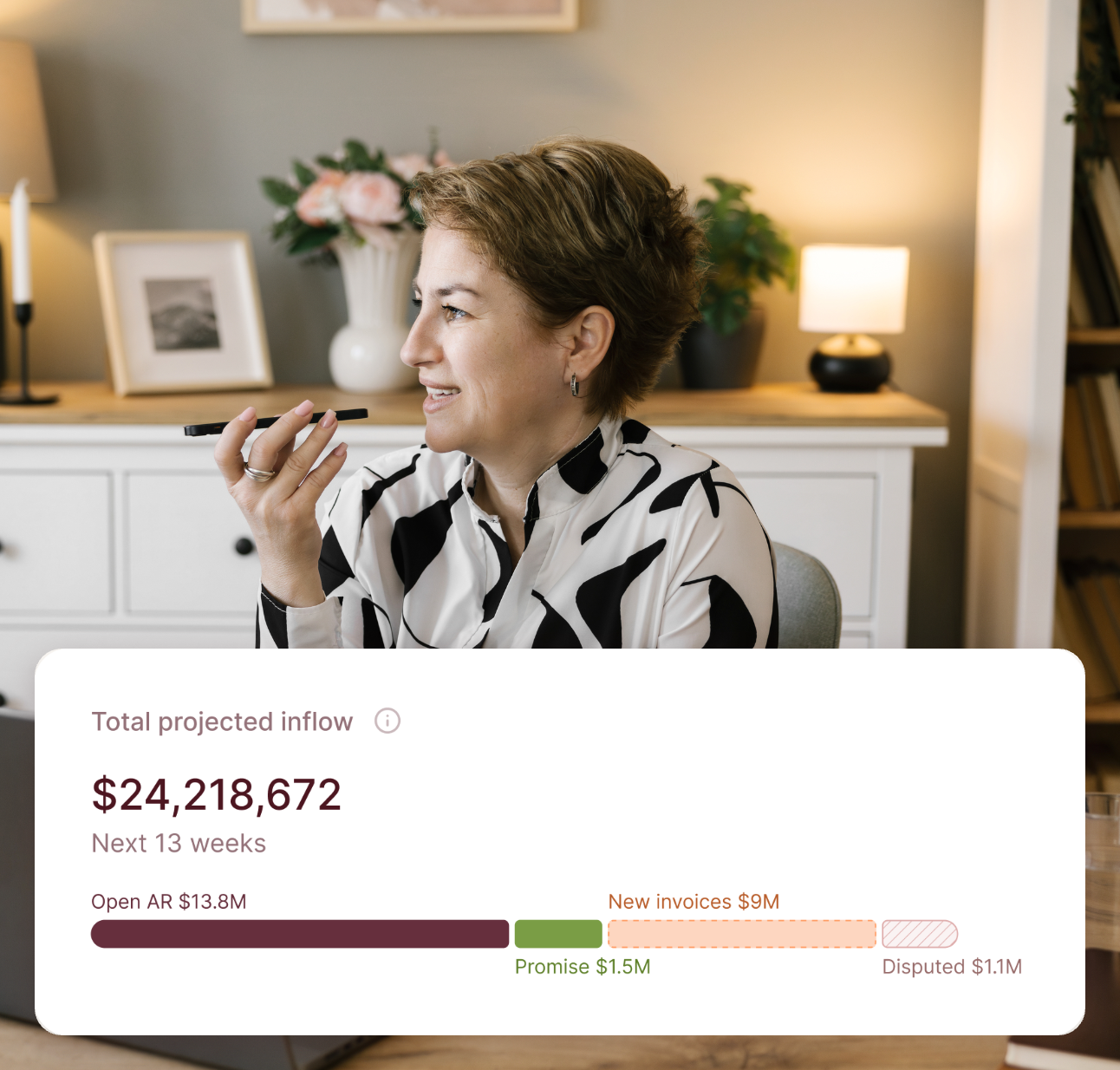
72 hours to go live against Tesorio's 2 to 4 weeks. A 50% DSO ceiling against Tesorio's 30% average. One category where Tesorio wrote the scorecard and left its own box blank.
TL;DR
- The real gap is who hits send: Tesorio's AI reads every AR email and drafts replies that sit "ready for one-click send or human review." Daylit's agents send under rules your team sets and hand a person only what needs judgment.
- Implementation is days against weeks: Daylit publishes 72 hours and Tesorio publishes 2 to 4 weeks. Tesorio deserves credit for stating a number at all.
- On three of the thirteen rows below, Tesorio publishes no figure: dispute resolution, on-time payment lift, and return on investment. That makes Daylit unmatched on those rows, not proven faster.
- FundNow is the one row with no contest: Daylit buys invoices directly from inside the platform, and Tesorio offers no financing.
- Some teams should pick Tesorio: if you want a structured scorecard to run your evaluation, or most of your AR runs through supplier portals, it's a strong fit.
Intro
If you've gotten far enough into evaluating AR automation to be reading this, Tesorio has probably come up. It positions itself around transparency and outcome-based evaluation, and it has built genuinely useful public frameworks for scoring AR vendors. None of that is in dispute. What's worth working through is whether Tesorio holds itself to the same standard it built for everyone else.
What Actually Matters When a Vendor Calls Itself Transparent
Tesorio's own buyer's scorecard names exception handling as a criterion any AR platform should be scored on. That's a fair standard. The test worth applying here is simple: does Tesorio score itself on it, in public, with a number attached? If a vendor asks you to demand transparency from everyone else, that's the first place to check whether it demands the same from its own materials.
The Comparison, Not the Pitch
Every figure below comes from Daylit's or Tesorio's own published materials. Where a number doesn't exist publicly, that gets stated directly instead of implied. These thirteen rows are the ones that actually change whether an AR platform fits a mid-market team: five measured results, then eight everyday AR tasks where the real question is whether an agent does the work or a person does.
Here is the whole comparison in one view. Every figure is explained underneath.
| Metric / Feature | Daylit | Tesorio |
|---|---|---|
| Measured metrics | ||
| Implementation time | 72 hours | 2 to 4 weeks |
| DSO reduction | Up to 50% | 30% average |
| Dispute resolution | 10x faster | N/A |
| On-time payment lift | Up to 40% | N/A |
| Return on investment | >10x | N/A |
| How Daylit leverages AI agents | ||
| AI phone calls (inbound + outbound) | Agent calls | No phone calls |
| Auto-tags dispute codes | Agent tags | Manually tagged by collectors |
| Daily AI prioritization | Agent ranks | AI-ranked, worked by collectors |
| AI dunning emails | Agent drafts, calls and sends | AI-drafted, sent by collectors |
| Invoice financing | Built in | Not offered |
| Auto-updates customer segmentation | Agent segmentation | Manually updated |
| Forecast updates with promises and disputes | Agent updates from inbox | Past payments only |
| Auto-tracks promises to pay | Agent logs | Auto-tracked from email |
Taking It Apart
Implementation time. Tesorio publishes 2 to 4 weeks on its own site, a real and specific figure. Daylit's 72 hours is faster, but the more useful comparison here is that both vendors are willing to state a number at all, unlike two of the other five competitors in this set.
DSO reduction. Daylit publishes up to a 50% reduction, a ceiling figure. Tesorio publishes a 30% average on its own homepage, though a separate Tesorio blog post cites a 33-day average reduction instead, an inconsistent unit for the same claim. Ask both vendors for the number a typical account actually sees, not the headline.
Dispute resolution. This is the sharpest gap on the page. Tesorio's own buyer's scorecard names exception handling as a criterion every AR vendor should be scored on. Tesorio has never published a number for its own performance on that exact criterion. Daylit publishes a 10x cut in resolution time, through Collection Cases opening every dispute as a tracked workflow with verification and customer resolution running in parallel.
On-time payment lift. Daylit reports up to a 40% increase in on-time payments. Tesorio publishes no comparable figure.
Return on investment. Daylit reports a return of more than 10x on what teams spend on the platform. Tesorio promotes a G2 "Best Estimated ROI" badge, but doesn't publish an ROI figure from its customers. That's what Tesorio has published, not proof of what it delivers.
AI phone calls. Daylit's agent runs a collections call once a collector starts it, and writes the outcome back to the account. Before any call connects, Daylit checks opt-outs, do-not-call lists, the contact's local calling hours, and a cap of seven calls to one number in seven days. Tesorio's Collections Agent works over email, and we found no calling on its site.
Auto-tags dispute codes. Daylit's agent classifies every dispute to reasons your company defines, and a collector corrects the tag only if it's wrong. Every dispute opens as a Collection Case, with verification and customer resolution running at the same time and dunning on that invoice suppressed automatically the moment the case opens. Tesorio's Collections Agent picks up dispute signals from email, and its AI agents log into supplier portals directly to check status and resolve disputes, a real and specific mechanism. What we couldn't find on Tesorio's site is dispute reason codes, so sorting disputes by cause is left to your team.
Daily AI prioritization. Both platforms rank the worklist with AI. Daylit lets your AR manager set the weights behind the ranking, so the list follows your own collection policy. Tesorio's machine learning scores every open invoice from "payment history, customer risk, aging, and dozens of behavioral signals" into a worklist that updates in real time, and it lets you segment customers by custom tags. We found no mention of managers adjusting how those signals are weighted. That's what Tesorio has published, not proof of what it can't do.
AI dunning emails. Daylit's agent drafts every dunning email and sends it under your auto-vs-review rules, and runs calls once a collector starts them. Tesorio's AI drafts contextual responses that sit "ready for one-click send or human review," so a collector still makes the send. Daylit is also building text messaging for outreach.
Embedded invoice financing. FundNow buys the invoice directly from inside the platform, so cash lands today instead of waiting on the customer's timeline. Tesorio has no native equivalent, and its own founder has publicly described traditional factoring as something closer to "payday lending for business," positioning Tesorio as an alternative to financing rather than a provider of it. This is the one row with no contest either way.
Segment changes. Daylit's Smart Labels recompute on every sync, and Label Effects moves a customer into or out of a collection program the moment their label changes, with a "Why this label?" note on every change. Tesorio's Automated Dunning builds segments from aging, risk, balance, tier, and ERP fields, and paid or disputed invoices drop out of a campaign on their own. We couldn't find a customer being moved from one plan to another automatically, so that stays a manual update.
Cash forecasting. Both vendors forecast 13 weeks out. Tesorio's forecast works at the invoice level and updates continuously, trained on "historical payment patterns, customer behavior, and ERP data." Daylit's forecast is weighted by how each customer actually pays, and its agent also reads promises and disputes from email and shifts each invoice's predicted date, refreshed nightly. Tesorio's forecasting page doesn't mention promises or disputes as inputs.
Auto-tracks promises to pay. This row is a tie. When a customer promises a payment date in an email, Daylit's agent logs it on the account. Tesorio's Collections Agent does the same, automatically extracting "payment promises, committed dates, and dispute signals" so every commitment is tracked without manual data entry.

Bring your three messiest open disputes and your current DSO. We'll walk them through Daylit with you and show which rows the agent handles on its own, and where your team still steps in.
Who Does the Work
Tesorio's AI does a lot of the reading. It classifies every incoming AR email as a payment confirmation, dispute, question, or escalation, pulls out promises to pay, and drafts the reply. The split is the send. Tesorio's drafts sit "ready for one-click send or human review," so a person still decides what goes out. Daylit's agents send under auto-vs-review rules your team sets, and hand a person only what needs judgment.
Some of the work already runs on its own at both:
- Reading inbound email: both classify customer replies without a collector sorting the inbox.
- Logging promises to pay: both pull payment dates out of email and track them automatically.
- Not chasing paid invoices: Tesorio says "you never chase a customer who has already paid," and Daylit re-checks the balance on every draft at send time, cancelling it if the customer already paid.
Three more tasks show where the two models split:
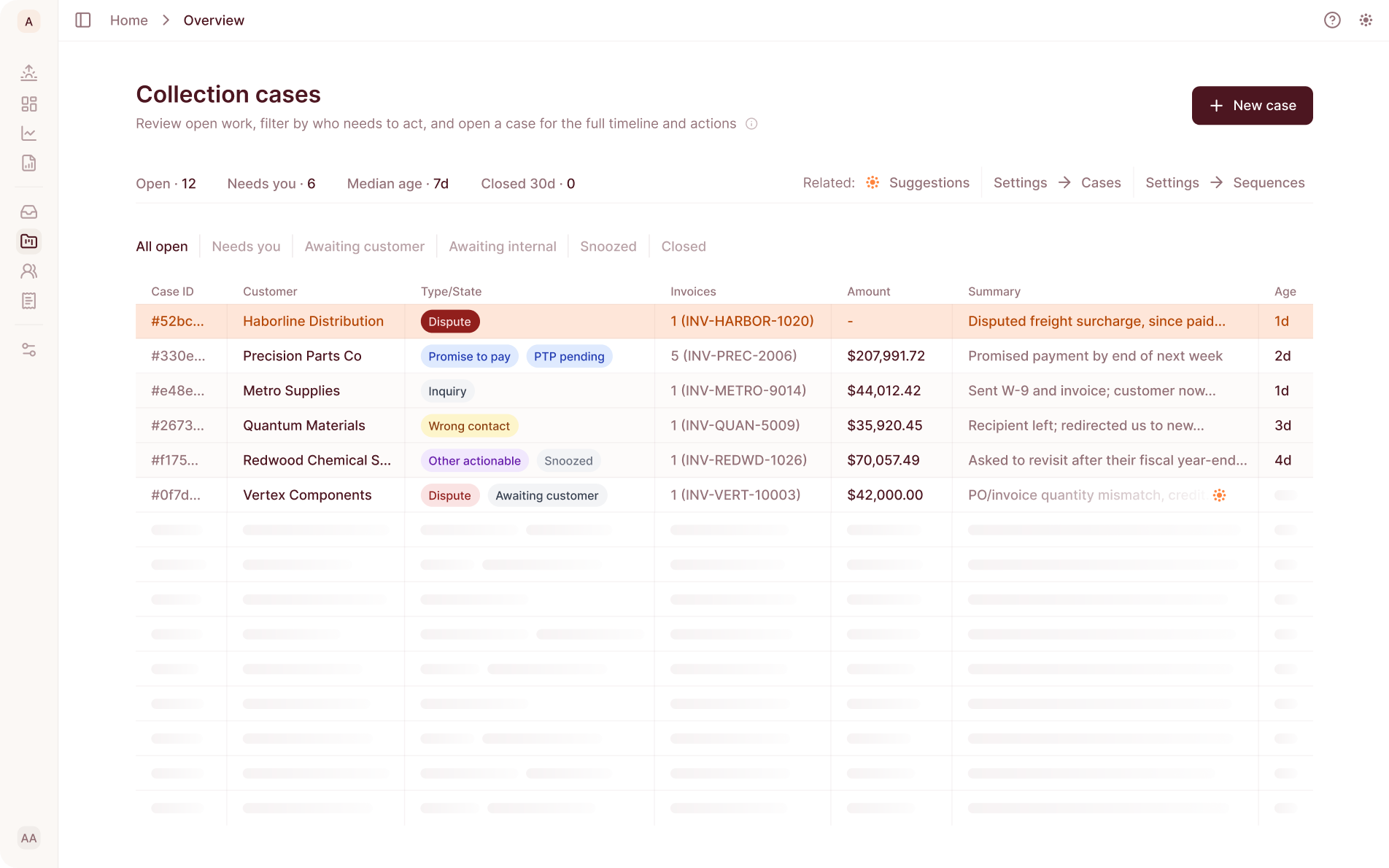
A dispute gets a reason and a case, not just a label. Daylit sorts each dispute into reasons your company defines, opens a Collection Case, and runs internal verification and customer resolution at the same time. Tesorio flags disputes from email and its agents can check supplier portals, but we found no reason codes or parallel handling on its site.
Dead addresses stop getting automatic replies. When an email hard-bounces, Daylit marks that address as undeliverable and blocks its automatic replies from going back to it. We didn't find bounce handling described on Tesorio's site.
Calls are part of the job. Daylit's agent runs a collections call once a collector starts it and writes the outcome back to the account. Tesorio's Collections Agent works over email, and we found no calling on its site.
Count the tasks on your team's list that still need a person under each model. That difference is headcount, and it compounds every month the platform runs.
Where Daylit Is Deliberately Different
Daylit isn't trying to out-transparent Tesorio on paper. It's a different bet entirely: most mid-market AR teams don't need a scorecard, they need collections that execute on their own and cash that doesn't depend on how fast a customer pays. FundNow exists as a built-in capability because of that bet. Every claim on this page comes with its source attached, for the same reason.
Where Tesorio Is the Right Call
If your evaluation process genuinely benefits from a structured, criteria-based scorecard walking you through what to ask any vendor, Tesorio built a useful one, and its collections automation for supplier-portal-heavy AR is real and specific. That's a genuine strength for a team that wants a framework before it wants a platform.
The Real Question Isn't Which Platform Scores Higher, It's Which One Actually Publishes a Score
Tesorio didn't get the framework wrong. Naming exception handling, integration time, and dispute resolution as things a buyer should demand is good advice. What the framework doesn't do is hold Tesorio to it. Two of those rows have no Tesorio number attached anywhere public.
So ask a direct question on your next Tesorio call: which of the criteria on your own scorecard does Tesorio score itself on, in writing? If the answer is fewer than it asks of everyone else, you have your answer.
Frequently Asked Questions
What is Daylit, exactly?
An AI-native AR automation platform for mid-market B2B finance teams. A decision layer trained on $100B of AR transactions works out why each customer isn't paying, then runs collections, disputes, and follow-up through configurable playbooks per case type. FundNow, built into the same platform, converts outstanding invoices to cash without a separate factoring relationship.
Is this fair to Tesorio?
Every Tesorio figure here comes from Tesorio's own site, including its own buyer's scorecard. Where Tesorio hasn't published a number, that's stated plainly rather than implied.
What does Tesorio actually do better?
A structured, public scorecard for evaluating any AR vendor, and collections automation built specifically for supplier-portal-heavy AR workflows.
How long does Tesorio actually take to implement?
2 to 4 weeks, by Tesorio's own published figure on its homepage. That's faster than most enterprise AR platforms, and Tesorio is one of the few vendors that states a number at all. Ask for the timeline that applies to your ERP setup in writing.
When do results actually show up?
Integration is measured in days, not weeks. The first visible change is on disputes, where resolution time drops by 10x. On-time payment and DSO move over the following billing cycles, as pre-due-date outreach replaces fixed reminder schedules. Both of those figures in the table above are ceilings companies have reached, not first-month expectations.
Why does this page keep saying "Tesorio hasn't published" a number?
Because a comparison only means something if every number in it holds up. Three of the thirteen rows have no Tesorio figure at all, and on three more (phone calls, dispute reason codes, and automatic segment moves) we couldn't find the capability described anywhere on Tesorio's site. Tesorio is also the one vendor in this set that built a public scorecard asking for exactly that kind of disclosure, so holding it to its own standard isn't a gotcha. The honest reading is that Tesorio hasn't said, not that Daylit has proven it's ahead there.
Enter your revenue, DSO, team size, and invoice volume to get an itemized breakdown of your savings.