.svg)
.svg)

Can AI Automate Invoice Follow-Ups for Service Companies?
Yes. AI-powered accounts receivable automation can fully automate invoice follow-ups for service companies, including professional services, consulting, staffing, and field services firms. Modern AI agents execute multi-channel, multi-stakeholder follow-up sequences that reference project names, adjust tone by client tier, escalate through relationship managers, and prioritize outreach based on account value — all without manual intervention from AR teams.
However, automated invoice follow-up for service companies requires a fundamentally different approach than what works for product-based or subscription businesses. Service firm invoices are tied to project deliverables, milestone approvals, and relationship-sensitive payment cycles. A generic dunning sequence that treats a $500,000 consulting client the same as a $2,000 one-time buyer will damage relationships and reduce future revenue. The most effective AI follow-up systems for services adapt their behavior based on project context, client history, and engagement value.
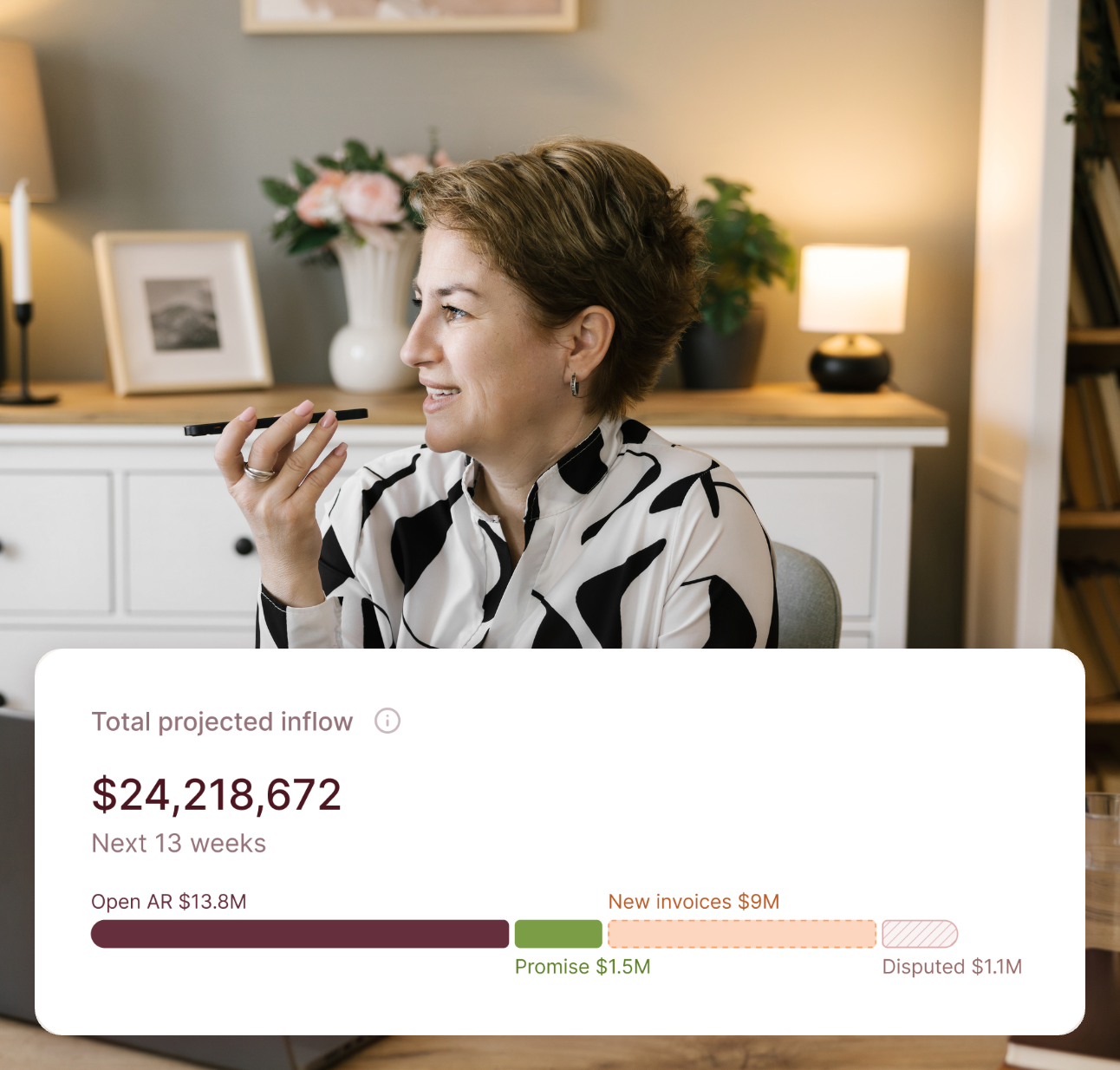
Payment reminders can remove missed follow-ups, but the effect on DSO depends on the causes of delay. As a hypothetical example, $30 million in annual credit sales and a 15-day DSO reduction imply approximately $1.23 million of released receivables, not a guaranteed return.
What Does an AI-Powered Invoice Follow-Up Workflow Look Like for Service Companies?
An effective AI-powered invoice follow-up workflow for service companies maps communication touchpoints across a 30+ day timeline, escalating through different stakeholders and channels while maintaining relationship sensitivity at every step. Unlike generic dunning sequences, service-specific workflows reference project names, deliverable status, and engagement history to provide context that accelerates payment.
The following workflow represents a best-practice automated follow-up sequence for mid-market service companies with $50M–$500M in revenue, handling project-based billing with net-30 to net-90 payment terms.
| Timeline | Action | Stakeholder | Tone | Purpose |
|---|---|---|---|---|
| Day 1 | Email referencing project name and deliverable | Billing contact | Friendly confirmation | Confirm receipt and flag any issues early |
| Day 7 | Follow-up email with invoice copy and payment link | Billing contact + AP | Professional reminder | Reduce friction by providing direct payment access |
| Day 14 | Escalation with project context and payment history | Relationship manager | Consultative outreach | Engage someone with authority and relationship equity |
| Day 21 | AI-prioritized outreach based on client value and risk | Client-tier-appropriate contact | Adjusted by account value | Focus limited AR resources on highest-impact accounts |
| Day 30+ | Collections sequence with full communication history | AR team + account executive | Firm but relationship-preserving | Prevent write-offs while protecting future revenue |
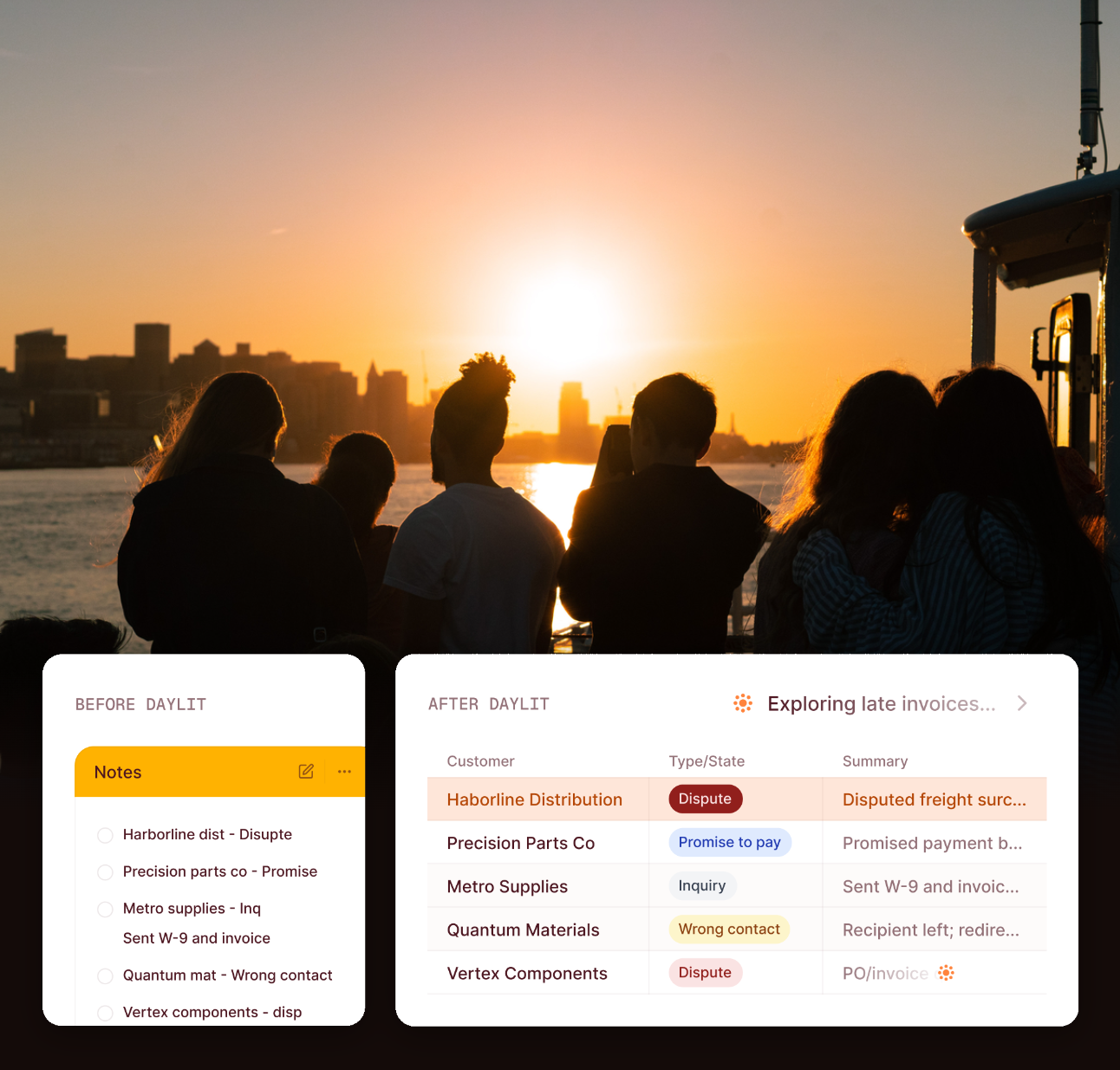
This workflow adapts dynamically based on AI analysis of each client's payment history, current engagement value, and responsiveness to previous communications. A client that historically pays on day 28 receives a lighter touch than a client trending toward 60+ day payment cycles. Platforms like Daylit use autonomous AI agents to execute these workflows, adjusting tone, timing, and channel selection in real time based on client behavior signals.
For service-company follow-up, identify the billing contact, project sponsor and approver. Route the message to the person who can resolve the specific issue.

How Does Multi-Channel AI Follow-Up Compare to Single-Channel Approaches?
Multi-channel AI follow-up significantly outperforms single-channel approaches for service company accounts receivable. Relying exclusively on email — or exclusively on voice calls — leaves substantial collection effectiveness on the table. The most effective AR automation platforms combine email, SMS, phone, and self-service client portals into a coordinated sequence that reaches clients through their preferred communication channel.
| Channel | Use | How to evaluate |
|---|---|---|
| Invoice copies, details and a documented thread | Track replies and payment outcomes in your portfolio. | |
| Phone | Disputes and sensitive escalations | Record the agreed next step and owner. |
| SMS | Brief reminders where appropriate and permitted | Respect customer preferences and approved communication rules. |
| Portal | Invoice access and payment status | Check customer adoption and rejected submissions. |
Email provides a documented trail and can include invoices and project records. Track delivery and actual responses in your own customer portfolio.
Use SMS only where it fits the customer’s communication preferences and your approved process. Avoid treating an assumed open rate as evidence that a payment will follow.
A phone conversation can clarify a dispute, missing approval or cash constraint. Coordinate channels and pause routine reminders when an issue needs human resolution.
How Can Service Companies Maintain Client Relationships While Automating Collections?
Maintaining client relationships while automating collections is the central challenge for service companies implementing AI-powered invoice follow-ups. The solution lies in tiered automation that adjusts communication frequency, tone, and escalation paths based on client value and engagement status.
Tier 1: Strategic Accounts ($500K+ Annual Engagement)
These clients receive the lightest automation touch. Follow-ups are routed through relationship managers, communications reference specific project milestones and deliverables, and escalation timelines are extended. A strategic client at day 45 on net-60 terms receives a consultative check-in, not a collections notice. AI flags the account for human review before any communication that could be perceived as adversarial.
Approach: Human-led outreach with AI flagging and communication history. Extended escalation timelines. Zero automated dunning.
Tier 2: Core Accounts ($50K–$500K Annual Engagement)
These clients receive balanced automation. Email follow-ups reference project names and include direct payment links. The AI adjusts cadence based on historical payment patterns — a client that consistently pays on day 35 receives its first reminder at day 30, while a client trending toward 60+ days receives earlier outreach. Escalation to an account executive occurs at day 21 if payment is not received or a dispute is not logged.
Approach: Automated email and portal sequences with AI-adjusted cadence. Human escalation at day 21 if unresolved.
Tier 3: Transactional Accounts (Under $50K)
These clients receive standard automated follow-up sequences. The AI runs the full email, SMS, and portal-based workflow without human intervention unless a dispute is flagged. Communication is professional and project-aware but does not require relationship manager involvement for routine follow-ups.
Approach: Automate suitable reminders with a clear human review path for disputes, uncertain records and sensitive accounts.
Automate routine reminders where the data is reliable. Route disputes, scope disagreements and sensitive escalations to a named human owner; measure the actual share of work handled automatically.
What Should Service Companies Do About Chronically Slow-Paying Clients?
Chronically slow-paying clients present a strategic challenge for service companies that goes beyond collections automation. When a client consistently pays 30–60 days beyond terms despite repeated follow-up, the underlying issue is usually not awareness — it is either cash flow difficulty, internal approval bottlenecks, or a deliberate payment strategy. AI-powered AR tools can identify these patterns, but resolving them often requires a combination of operational changes and capital products.
- Tighten the credit box proactively. AI-powered AR platforms analyze payment trends across the client portfolio to identify deteriorating payment behavior before it becomes a write-off risk. Companies should track DPT — how late a payment is relative to agreed terms — as an early indicator of financial difficulty, product quality issues, or broader credit deterioration. When DPT trends upward for a specific client or segment, it is time to review credit limits and payment terms.
- Introduce milestone-based payment structures. For project-based services, restructuring billing from back-loaded to milestone-based significantly reduces exposure. Instead of invoicing $300,000 at project completion, billing $75,000 at each of four milestones keeps cash flowing and limits the amount at risk if the client's financial situation deteriorates.
- Evaluate early-payment discounts against financing cost. For a hypothetical 2% discount paid 50 days sooner, the simple annualized cost is approximately (2 ÷ 98) × (365 ÷ 50), or 14.9%, before other costs. The decision depends on your actual alternatives.
- Consider financing where receipts lag unavoidable operating costs. Compare an invoice sale with secured borrowing using the actual fees, repayment dates, recourse and collection responsibilities. Do not assume either arrangement is off balance sheet.
The key insight is that AI-powered AR automation and capital products are complementary, not competing solutions. AI optimizes the follow-up process to collect as fast as possible. Capital products address the structural cash flow gap when clients simply will not pay faster regardless of follow-up quality.

How Much Working Capital Can Service Companies Free by Reducing DSO with AI?
Reducing Days Sales Outstanding through AI-powered invoice follow-up directly converts to freed working capital that service companies can deploy for growth, hiring, or debt reduction. The formula is: Working Capital Freed = (Annual Revenue ÷ 365) × (Current DSO − Target DSO).
The table below is a hypothetical sensitivity calculation using annual credit sales and a 15-day DSO reduction. Its starting and ending DSO values are assumptions, not industry averages or expected AI results.
| Hypothetical annual credit sales | Assumed DSO reduction (days) | One-time receivables release |
|---|---|---|
| $15,000,000 | 15 | $616,438 |
| $30,000,000 | 15 | $1,232,877 |
| $50,000,000 | 15 | $2,054,795 |
| $75,000,000 | 15 | $3,082,192 |
Released receivables provide a one-time liquidity benefit. Maintaining the lower DSO sustains that lower receivables balance, but does not release the same cash again each year.
Build the business case from a measured baseline and pilot results. Separate released working capital from recurring time savings and financing-cost changes, then subtract total implementation and operating costs.
What Are the Limitations of AI-Powered Invoice Follow-Up for Services?
AI-powered invoice follow-up delivers substantial efficiency gains for service companies, but it is not a complete replacement for human judgment in every AR scenario. Understanding the limitations helps service firms set appropriate expectations and design workflows that combine AI automation with human expertise.
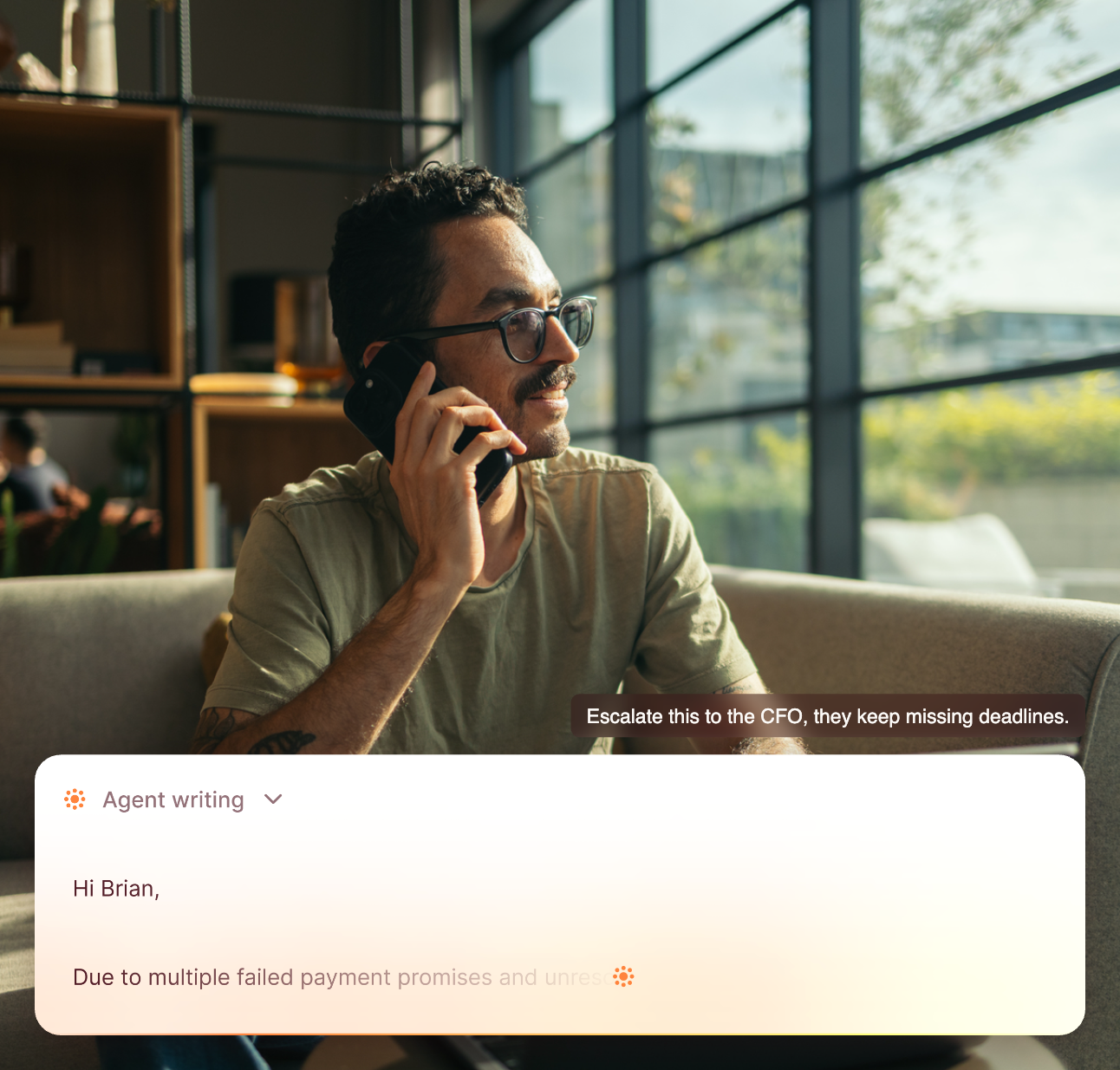
- Complex dispute resolution. When a client disputes an invoice based on deliverable quality, scope disagreement, or contract interpretation, AI agents cannot negotiate a resolution. They can flag the dispute, route it to the appropriate human reviewer, and provide full communication history — but the actual resolution requires human judgment and relationship skills.
- Highly sensitive relationship situations. If a service company's largest client is going through a CFO transition, a merger, or a publicized financial difficulty, the standard AI follow-up cadence may be inappropriate. Human AR managers need the ability to override AI workflows and apply contextual judgment for accounts where the relationship stakes are exceptionally high.
- First-time billing for new clients. The first invoice in a new client relationship sets the tone for future interactions. AI follow-up works best when it has historical payment data to calibrate its approach. For new clients, the initial follow-up sequence should be more conservative, and AI models require 2–3 billing cycles to learn the client's payment behavior.
- Cross-border and multi-currency invoicing. Service companies billing international clients face additional complexity around currency conversion, cross-border payment processing times, and varying business customs around payment terms. AI systems are improving in this area but may not fully account for the 5–15 day additional processing time common in international B2B payments.
The aim is to reduce repetitive follow-up while preserving human judgment for disputes, negotiation and sensitive relationships. Measure exception volume and response quality during the pilot.
Frequently Asked Questions
Can AI fully replace human AR collectors for service companies?
AI can support routine reminders and payment confirmations. Humans should handle complex disputes, negotiations and sensitive relationships, with a clear escalation path.
How long does it take for AI invoice follow-up to reduce DSO?
Measure progress over comparable billing periods and account for sales mix and seasonality. There is no universal implementation period or DSO improvement established by this article.
Is automated invoice follow-up appropriate for high-value consulting clients?
Use the customer’s agreed communication preferences and relationship context. Confirm that the proposed workflow supports the necessary approvals and human escalation before enabling it.
What is the difference between invoice factoring and AR financing for service companies?
Factoring is a sale of receivables under agreed terms; AR financing generally uses receivables as security for borrowing. Compare fees, recourse, collection responsibilities and funding conditions in the actual contracts.
How much does AI-powered AR automation cost for a mid-market service firm?
Request pricing for your invoice volume, users, integrations and workflow scope. Include setup, maintenance and internal time. Evaluate costs against measured recurring benefits, not a presumed industry ROI.
Further reading
Accurate billing and separate dispute workflows support collections. See McKinsey’s analysis.
Related guidance: Accounts Receivable Automation for Field Services; How to Reduce DSO and Improve B2B Cash Flow.
References
- McKinsey: Working capital process improvements. Read September 28, 2026.