.svg)
.svg)

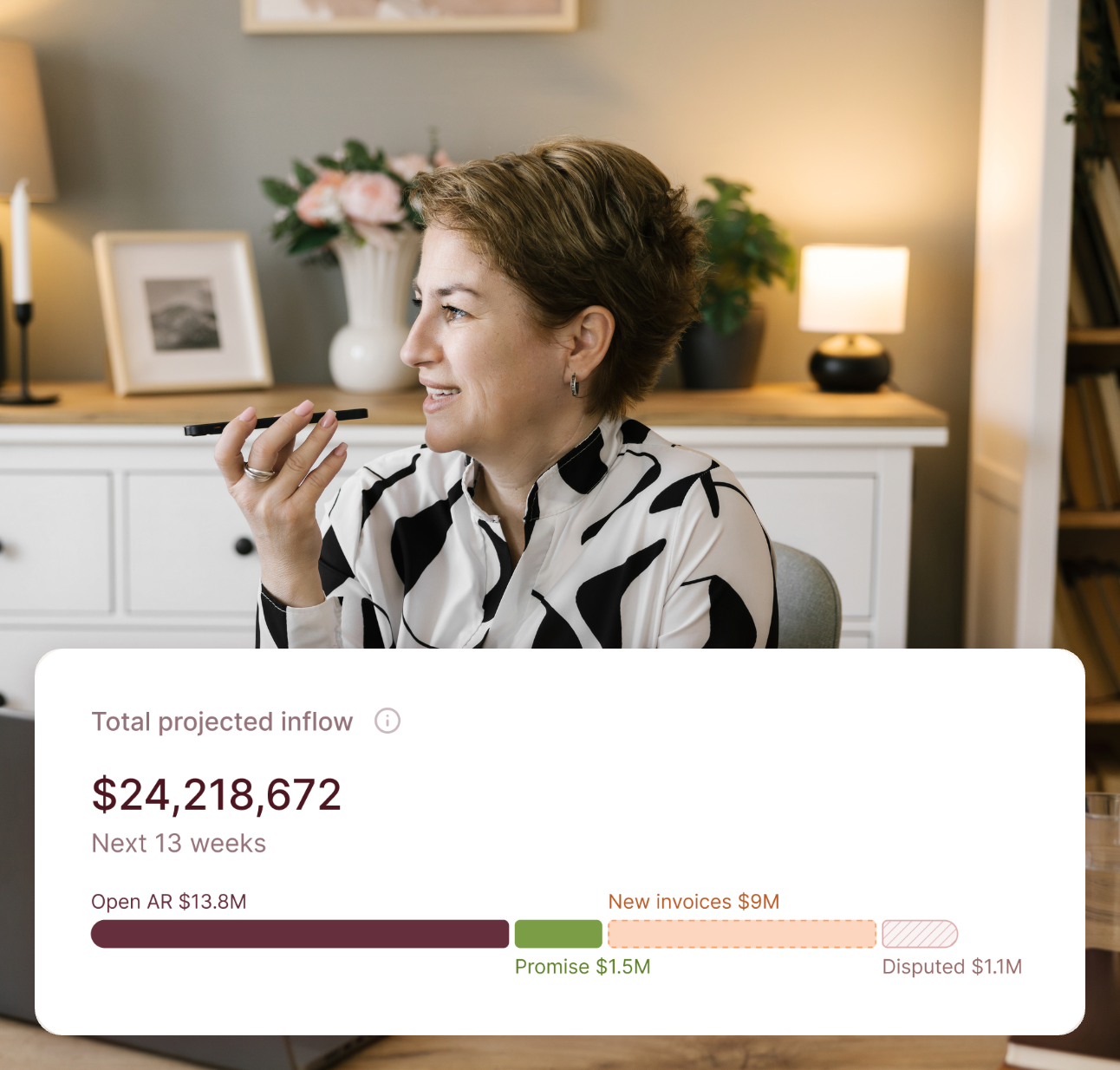
3 to 9 months to go live, by HighRadius's own methodology. A 10% average DSO reduction against Daylit's up-to-50% ceiling. Disputes resolved 10x faster, and a 40% lift in on-time payments. Two of those four numbers HighRadius has never published.
TL;DR
- The biggest gap isn't a feature, it's who does the work. HighRadius describes its own collections agents as human-in-the-loop: the AI ranks, suggests, and drafts, and a collector acts. Daylit's agents tag disputes, keep segments current, log promises, and update the forecast on their own, inside rules your team sets.
- HighRadius publishes a 3 to 9 month implementation range in its own Speed-to-Value methodology. Daylit publishes 72 hours.
- On three of the thirteen rows below, HighRadius has never published a figure at all: dispute resolution time, on-time payment lift, and return on investment. That makes Daylit unmatched on those rows, not proven faster.
- FundNow is the one row with no contest. HighRadius has no native equivalent.
- If you run consolidated order-to-cash across many global entities, stop reading and call HighRadius. This page is for the mid-market team that can't wait two quarters to start.
Intro
If you've gotten far enough into evaluating AR automation to be reading this, you've probably already had a call with HighRadius. It's a real platform with a decade of history and a Gartner Leader badge. None of that is in dispute. What's worth working through is which company each platform was actually built for, because that's what actually decides this comparison, not a feature checklist.
What to Actually Demand From an AR Platform Before Comparing Anyone
Before the row-by-row breakdown, here's what any platform should be able to show you without hedging: a specific integration timeline tied to your own ERP, not a vague "it depends." A named mechanism for dispute resolution, not just a feature label with no number behind it. Proof of what happens to cash when a customer is simply slow to pay, not just faster reminders. And workflow configuration that adapts to how your team already operates, not a generic script every customer gets forced into. Measure both platforms against that, not against each other's marketing.
The Comparison, Not the Pitch
Every figure below comes from Daylit's or HighRadius's own published materials and where a number doesn't exist publicly, we say so instead of implying one. These thirteen rows are the ones that actually change whether an AR platform fits a mid-market team: five measured results, then eight everyday AR tasks where the real question is whether an agent does the work or a person does. Figures last verified September 2026.
Here is the whole comparison in one view. Every figure is explained underneath.
| Metric / Feature | Daylit | HighRadius |
|---|---|---|
| Measured metrics | ||
| Implementation time | 72 hours | 3 to 9 months |
| DSO reduction | Up to 50% | 10% avg, 27% best case |
| Dispute resolution | 10x faster | N/A |
| On-time payment lift | Up to 40% | N/A |
| Return on investment | >10x | N/A |
| How Daylit leverages AI agents | ||
| AI phone calls (inbound + outbound) | Agent calls | Outbound calls done by collectors; AI answers inbound |
| Auto-tags dispute codes | Agent tags | Manually tagged by collectors |
| Daily AI prioritization | Agent ranks | AI-ranked, manually worked by collectors |
| AI dunning emails | Agent drafts, calls and sends | Manually sent by collectors with AI-assistance |
| Invoice financing | Built in | Not offered |
| Auto-updates customer segmentation | Agent segmentation | AI suggests, manually moved by collectors |
| Forecast updates with promises and disputes | Agent updates from inbox | Past payments only |
| Auto-tracks promises to pay | Agent logs | Captured on calls only |
Taking It Apart
DSO / collection speed. Daylit reports up to 50% reduction. HighRadius reports a 10% average across 1,000+ deployments, Forrester-validated and measured within 12 months, with a strongest individual case study at 27%. These are different kinds of number: Daylit's is a ceiling, HighRadius's is an average with a best case cited separately, and neither side publishes a baseline. Treat this row as unmatched rather than settled.
Integration time. HighRadius's own Speed-to-Value methodology runs in two phases. Phase 1 delivers roughly 80% of value in 3 months, and Phase 2 covers any remaining gap over a further 3 to 6 months, for a total of 3 to 9 months on their own disclosed terms. Other HighRadius pages cite anywhere from 3 weeks to 6 months depending on segment, so ask for the number that applies to your ERP setup in writing. Daylit's integrations go live in 72 hours across nine native ERP and accounting systems: SAP, Sage, NetSuite, Epicor, QuickBooks, Microsoft Dynamics 365, Xero, Zoho Books, and FreshBooks.
Dispute resolution time. Daylit cuts total time from dispute opened to dispute resolved by 10x, through Collection Cases. HighRadius publishes recovery-rate and productivity figures for deduction management, but no resolution time. That doesn't prove HighRadius is slower, only that it hasn't said.
On-time payment rate lift. Daylit reports a 40% increase versus fixed-interval dunning, by flagging payment risk 7 to 14 days before the due date and timing outreach per customer. HighRadius doesn't publish this metric. Its closest figure is a 20% reduction in past-due AR, which is related but measures something else.
Return on investment. Daylit reports a return of more than 10x on what teams spend on the platform. HighRadius offers a collections ROI calculator for estimating your own return, but doesn't publish an ROI figure from its customers. As with dispute resolution time, that's what HighRadius has published, not proof of what it delivers.
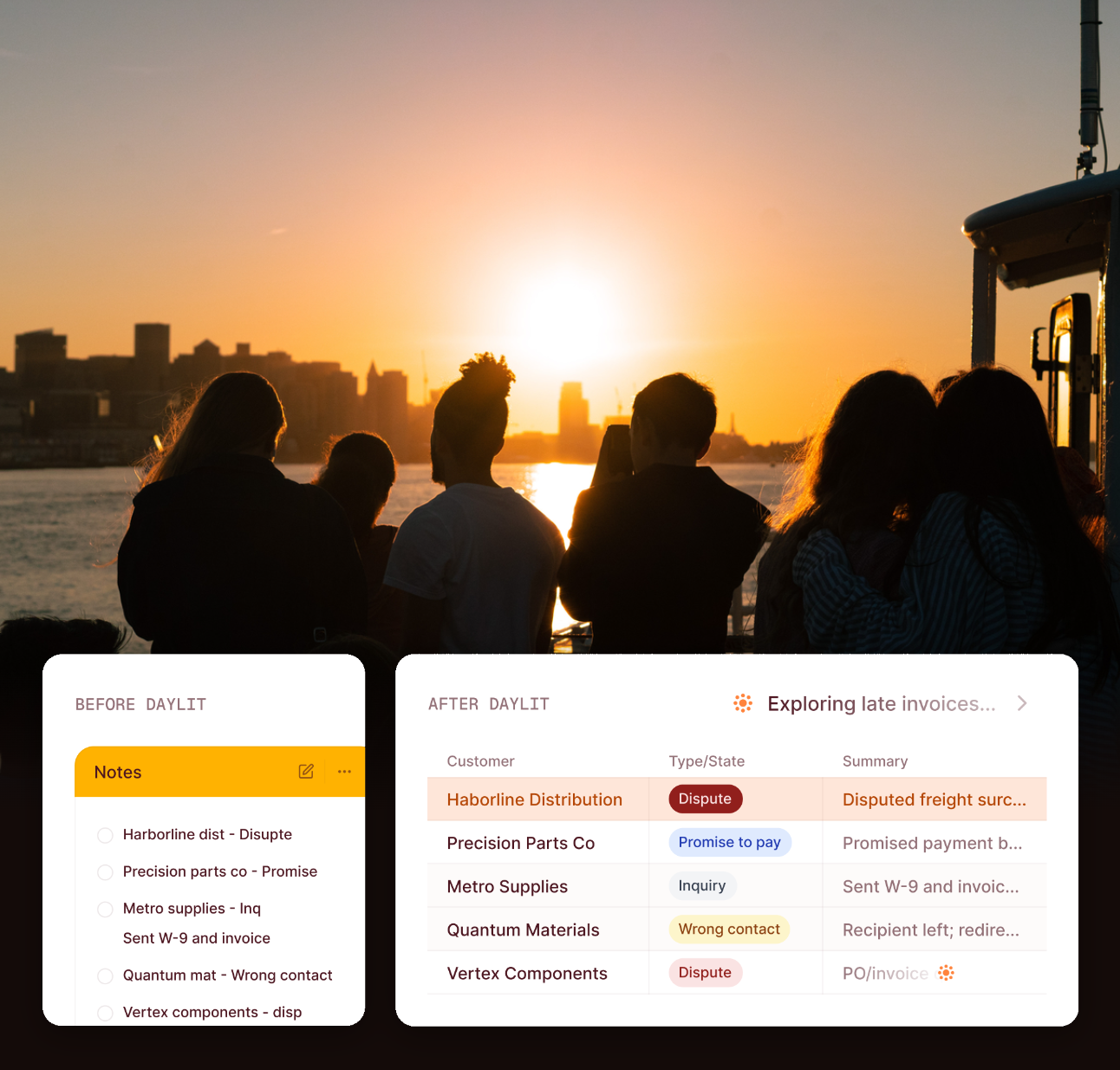
Auto-tags dispute codes. Every dispute at Daylit opens as a Collection Case. Verification and customer resolution run at the same time rather than in sequence, and conflicting dunning on that invoice stops automatically the moment the case opens. Each company also defines its own dispute reasons, and each reason routes to its own sequence, evidence request, and SOP instead of one generic dispute bucket. HighRadius runs AI-driven deduction management that autonomously researches and validates disputes across 500+ AP portals, with claimed gains of 30% in net recovery and 40% in productivity, and its dispute management product supports reason codes and routing. What we couldn't find anywhere on HighRadius's site is an automatic dunning pause when a dispute opens, or verification running alongside customer resolution.
Daily AI prioritization. Both platforms rank the worklist with AI. Daylit lets your AR manager set the weights behind the ranking, so the list follows your own collection policy. HighRadius's published materials describe a collections score built from 20+ customer parameters, but we found no mention of managers adjusting how those factors are weighted. That's what HighRadius has published, not proof of what it can't do.
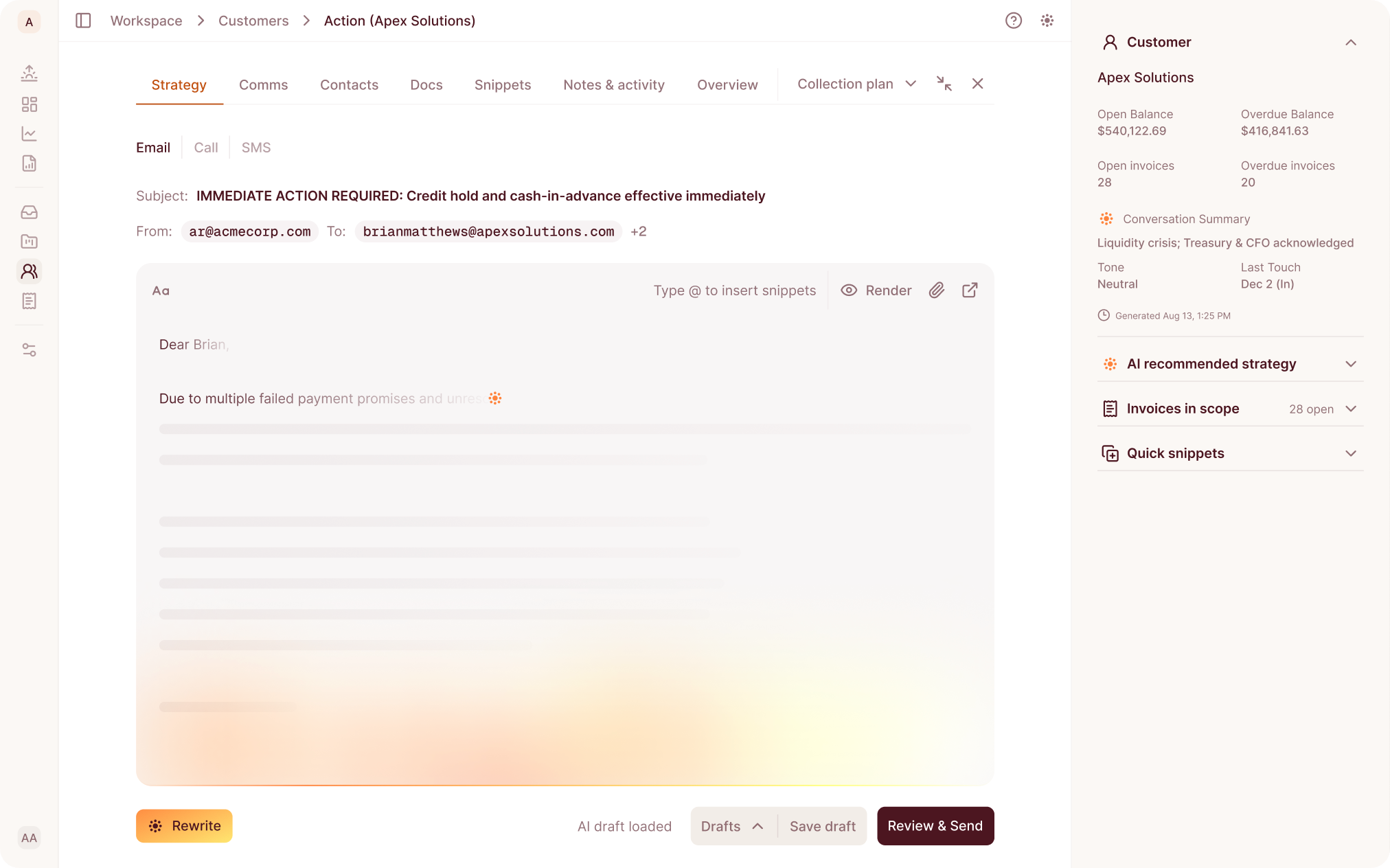
AI dunning emails. Daylit's agent drafts every dunning email under your auto-vs-review rules and runs calls once a collector starts them. HighRadius describes its drafting as AI-assisted with a human in the loop, so a collector reviews and sends. Daylit is also building text messaging for outreach.
Segment changes. Daylit's Smart Labels recompute on every sync, and Label Effects moves a customer into or out of a sequence or collection program the moment their label changes. Every automatic enrollment carries a "Why this enrollment?" note showing which label change caused it. HighRadius markets AI-based dynamic segmentation and a 0 to 100 collections score, but its published materials describe suggested next steps, not automatic re-enrollment, and no per-customer reason for why an account sits where it does. As with dispute resolution time, that's what HighRadius has published, not proof of what it can't do.
Cash forecasting. Daylit's Cash Flow Forecast gives a 13-week view weighted by how each customer actually pays. HighRadius publishes a longer horizon, 12 months, with a 95% accuracy claim. HighRadius's forecasting sits in a separate treasury suite with no financing attached, though. If the priority is doing something about the gap the forecast shows, only Daylit can turn that gap into cash inside the same platform.
AI phone calls. Daylit's agent runs a collections call once a collector starts it: it recognizes a voicemail greeting instead of talking into it, routes a wrong number into a case, and writes the outcome back to the account. Customers who call in are answered the same way, with the caller verified before anything about the account is discussed. Before any call connects, Daylit checks opt-outs, do-not-call lists, the contact's local calling hours, and a cap of seven calls to one number in seven days. HighRadius's Virtual Call Attendant answers inbound calls around the clock and routes them to collectors, but we found no AI-run outbound calling and no published calling rules.
Embedded invoice financing. FundNow buys the invoice directly from inside the platform, so cash lands today instead of waiting on the customer's timeline or setting up a separate financing relationship elsewhere. HighRadius has no native equivalent. This is the only row with no contest.
Auto-tracks promises to pay. When a customer promises a payment date in an email, Daylit's agent logs it on the account and moves the forecast to match. HighRadius captures promises during inbound calls. We couldn't find promises made by email being logged automatically.

We'll walk your setup with you, using the ERPs and workflows you actually run, and show you exactly where the timeline lands.
Who Does the Work
HighRadius has AI across its platform. The difference is what happens after the AI has an answer. HighRadius describes its collections agents as "Assisted Agents" with "a human-in-the-loop": the AI ranks the worklist, suggests next steps, and drafts the message, and a collector does the rest. Daylit's agents do the work themselves, inside rules your team sets, and hand a person only what needs judgment.
The table above already covers the everyday tasks. Four more show the same split, and they're the ones a collector notices most.
Inbound email becomes a case on its own. Daylit's agent reads every inbound email, sorts it as a dispute, a promise to pay, an inquiry, or a wrong contact, and opens or updates the case under your auto-vs-review rules. HighRadius's inbox agent is labeled "Assisted": it sorts emails into collections and non-collections and creates a task for a collector to work.
Dead addresses stop getting automatic replies. When an email hard-bounces, Daylit marks that address as undeliverable and blocks its automatic replies from going back to it. We didn't find bounce handling described on HighRadius's site.
A dispute pauses the chase. The moment a dispute opens, Daylit stops dunning on that invoice, then runs internal verification and customer resolution at the same time instead of one after the other. We found neither an automatic pause nor parallel handling on HighRadius's site.
Every message is re-checked before it sends. Daylit checks the balance on each draft at send time. If the amount changed, it updates the draft and flags the change to the reviewer. If the customer already paid, it cancels the message. We didn't find an equivalent on HighRadius's site.
Count the tasks on your team's list that still need a person under each model. That difference is headcount, and it compounds every month the platform runs.
Where Daylit Is Deliberately Different
HighRadius uses AI to help a collector work faster. Daylit uses agents so the collector has less to work. Daylit isn't a smaller HighRadius. It's a different bet entirely: most mid-market AR teams don't need a global, multi-entity order-to-cash suite. They need collections that execute on their own, disputes that resolve in days, and access to cash that doesn't depend on how fast a customer pays. FundNow exists as a built-in capability, not a bolt-on partnership, because of that bet. Every integration is measured in days, not fiscal quarters, for the same reason. So are segments that move customers into the right program on their own and dispute reasons each company defines for itself: the AR team shouldn't be the glue holding the workflow together.
Where HighRadius Is the Right Call
If you're running consolidated order-to-cash across dozens of global entities, HighRadius has real, purpose-built depth there: credit risk decisioning, deduction management at high volume, and the Gartner and IDC validation that comes from a decade in exactly that market. Its exception-handling and approval-workflow proof points are also more mature than Daylit's right now, backed by scale and a named company result rather than an internal description. And its cash forecast looks further out, 12 months against Daylit's 13 weeks. That's a genuine advantage for the right company, and worth knowing plainly rather than downplaying.
The Real Question Isn't Which Platform Is Better, It's Which One Was Built for You
HighRadius didn't get any of this wrong. It built based on the needs of enterprises, at a depth most mid-market teams will never use and can't afford to wait for. Where it's ahead, on forecast horizon and on the maturity of its exception-handling proof, that lead is real. What it also means is a 3-to-9-month runway before any of that value shows up, on a platform sized for a company much larger than most of the ones reading this.
So work out one number before your next call: how many months can your AR team keep collecting manually before the cost of waiting exceeds the cost of switching. Then ask HighRadius for the implementation timeline for your specific ERP setup, in writing. If those two numbers don't reconcile, you have your answer.
Frequently Asked Questions
What is Daylit, exactly?
An AI-native AR automation platform for mid-market B2B finance teams. A decision layer trained on $100B of AR transactions works out why each customer isn't paying, then runs collections, disputes, and follow-up through configurable playbooks per case type. FundNow, built into the same platform, converts outstanding invoices to cash without a separate factoring relationship.
Is this fair to HighRadius?
Every HighRadius figure here comes from HighRadius's own product pages and methodology documentation, linked throughout. Where HighRadius hasn't published a number, the page says so instead of implying one.
What does HighRadius actually do better?
Consolidated order-to-cash across dozens of global entities, credit risk decisioning, deduction management across 500+ AP portals at high volume, and a decade of Gartner and IDC validation in exactly that market. Its exception-handling and approval-workflow proof points are more mature than Daylit's today, and it publishes a 12-month cash forecast with a 95% accuracy claim.
How long does HighRadius actually take to implement?
3 to 9 months by its own Speed-to-Value methodology: 3 months for Phase 1, then a further 3 to 6 months of Phase 2 if any value gap remains. Other HighRadius pages cite 3 weeks to 6 months depending on segment, so ask for the number that applies to your ERP setup in writing.
When do results actually show up?
Integration is measured in days, not quarters. The first visible change is on disputes, where resolution time drops by 10x. On-time payment and DSO move over the following billing cycles, as pre-due-date outreach replaces fixed reminder schedules. Both of those figures in the table above are ceilings companies have reached, not first-month expectations.
Why does this page keep saying "HighRadius hasn't published" a number?
Because a comparison only means something if every number in it holds up. Three of the thirteen rows have no HighRadius figure at all, and on two more we couldn't find the capability described anywhere on HighRadius's site. The honest reading of both is that HighRadius hasn't said, not that Daylit has proven it's ahead there.
Enter your revenue, DSO, team size, and invoice volume to get an itemized breakdown of your savings.