.svg)
.svg)

Daylit publishes a number on every measured row below. Billtrust's best-case go-live is 45 days, and its own site gives two different versions of its DSO number.
TL;DR
- The real gap is who does the work: Billtrust describes its calling as "human-led, AI-assisted," and collectors review every AI-drafted email and accept or reject each recommendation. Daylit's agents work inside rules your team sets and hand a person only what needs judgment.
- Implementation is days against weeks: Daylit publishes 72 hours. Billtrust's best case is "as little as 45 days" with its Quickstart option, and it doesn't publish a typical timeline.
- On three of the thirteen rows below, Billtrust publishes no comparable figure: on-time payment lift, end-to-end dispute resolution, and a current return on investment. That makes Daylit unmatched on those rows, not proven faster.
- FundNow is the one row with no contest: Daylit buys invoices directly from inside the platform, and Billtrust has no native equivalent.
- Some teams should pick Billtrust: if your business sits in one of the 40-plus industries it has built templates for, that depth and track record are hard to replicate.
Intro
If you've gotten far enough into evaluating AR automation to be reading this, Billtrust has probably come up. It's been in this space for over two decades, with thousands of companies across dozens of industries. None of that is in dispute. What's worth working through is what Billtrust will and won't tell you about itself, and what that means for a mid-market team trying to make a real decision.
What Actually Matters When a Vendor Has Been Around for Two Decades
Before the row-by-row breakdown, here's the real test for an established platform: does its own story hold up across its own pages, and is its implementation number a typical timeline or a best case. A vendor can check every feature box and still fail both of those, and a feature list won't tell you which one you're dealing with.
The Comparison, Not the Pitch
Every figure below comes from Daylit's or Billtrust's own published materials. Where Billtrust's own site contradicts itself or stays silent on a number, that gets noted directly instead of picking whichever figure looks better. These thirteen rows are the ones that actually change whether an AR platform fits a mid-market team: five measured results, then eight everyday AR tasks where the real question is whether an agent does the work or a person does.
Here is the whole comparison in one view. Every figure is explained underneath.
| Metric / Feature | Daylit | Billtrust |
|---|---|---|
| Measured metrics | ||
| Implementation time | 72 hours | As little as 45 days |
| DSO reduction | Up to 50% | Up to 50% |
| Dispute resolution | 10x faster | 10x on email handling ONLY |
| On-time payment lift | Up to 40% | N/A |
| Return on investment | >10x | N/A |
| How Daylit leverages AI agents | ||
| AI phone calls (inbound + outbound) | Agent calls | Manually called by collectors, AI takes notes |
| Auto-tags dispute codes | Agent tags | Manually tagged by collectors |
| Daily AI prioritization | Agent ranks | AI suggests, collector approves |
| AI dunning emails | Agent drafts, calls and sends | AI drafts, collector reviews |
| Invoice financing | Built in | Not offered |
| Auto-updates customer segmentation | Agent segmentation | Each move approved by collectors |
| Forecast updates with promises and disputes | Agent updates from inbox | Past payments only |
| Auto-tracks promises to pay | Agent logs | Manually logged by collectors |
Taking It Apart
DSO reduction. Both platforms claim the same ceiling: up to 50% reduction. "Up to" is a best case on both sides, not an average, and neither publishes a baseline. The difference is consistency. Billtrust's own site states a lower figure elsewhere, a "6 days or more" reduction, without reconciling the two.
Implementation time. Billtrust's most recent figure is a best case. Its October 2025 release says enterprises can take Collections live "in as little as 45 days" using its Quickstart option, and it doesn't publish a typical timeline. An older 2020 press release put ordinary go-live at around 90 business days, roughly four and a half calendar months. Daylit's integrations go live in 72 hours across nine native ERP and accounting systems: SAP, Sage, NetSuite, Epicor, QuickBooks, Microsoft Dynamics 365, Xero, Zoho Books, and FreshBooks.
Dispute resolution. The two 10x figures look alike and measure different things. Billtrust's applies to email handling only: it cites 10x faster email workflows for turning an email into a case, which is one step. Daylit's 10x covers the total time from dispute opened to dispute resolved. Billtrust does not publish the end-to-end number.
On-time payment lift. Daylit reports an increase of up to 40% in on-time payments versus fixed-interval dunning, by flagging payment risk 7 to 14 days before the due date and timing outreach per customer. Billtrust publishes no on-time payment figure. It does track an On-Time Invoice Delivery Rate in its own KPI framework, but that measures whether an invoice goes out on time, not whether a customer pays on time.
Return on investment. Daylit reports a return of more than 10x on what teams spend on the platform. Billtrust doesn't publish a current ROI figure from its customers. The closest is a Forrester Consulting study it commissioned in January 2021, which modeled a 390% return over three years for one composite organization. That's five years old and based on a modeled company rather than measured customers, so the table leaves Billtrust's cell as N/A. Ask Billtrust for a current figure.
AI phone calls. Daylit's agent runs a collections call once a collector starts it, and writes the outcome back to the account. Before any call connects, Daylit checks opt-outs, do-not-call lists, the contact's local calling hours, and a cap of seven calls to one number in seven days. Billtrust's Agentic VoIP is "human-led, AI-assisted": collectors make every call themselves, and the AI transcribes it and highlights key commitments.
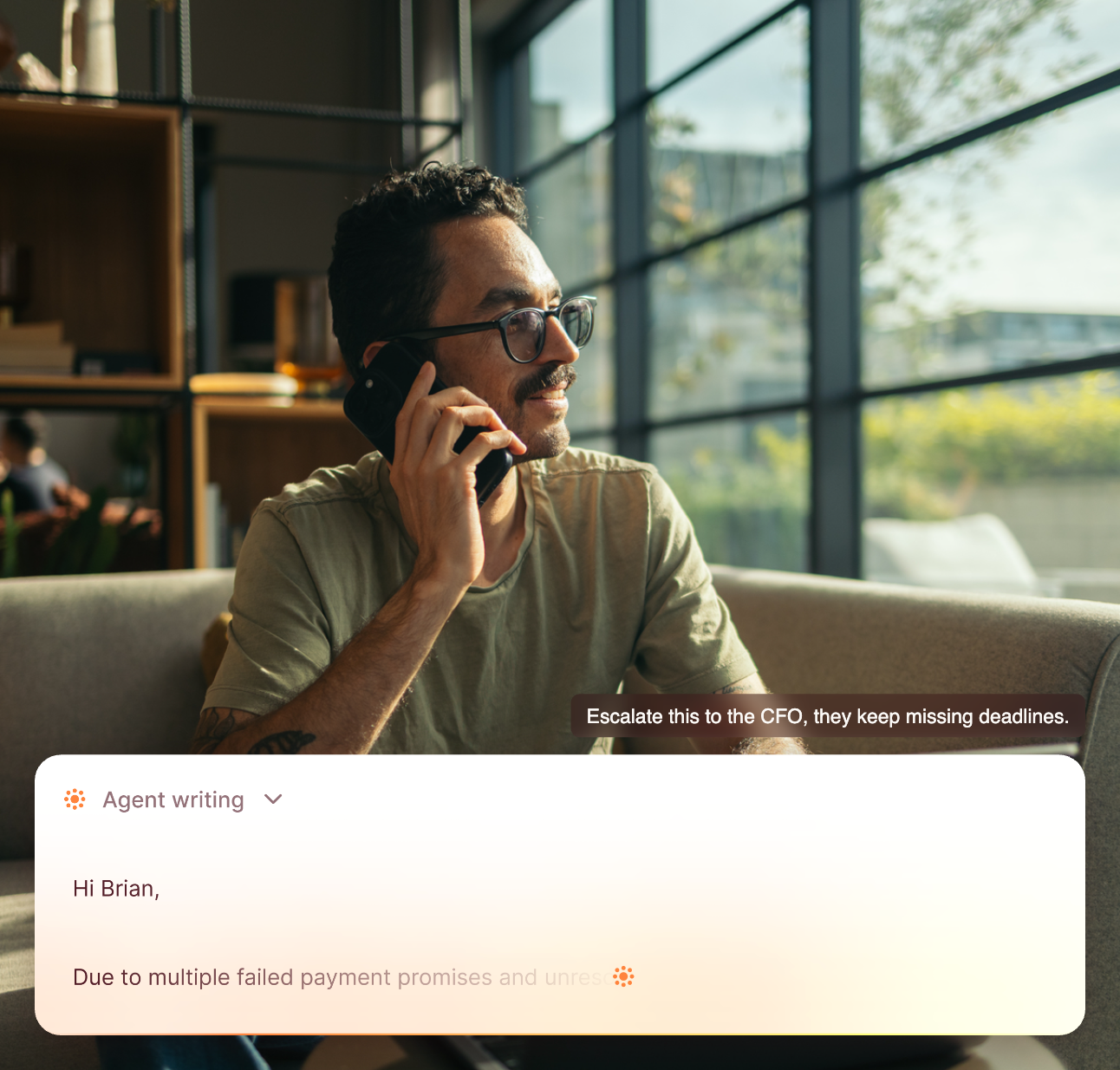
Auto-tags dispute codes. Every dispute at Daylit opens as a Collection Case, and the agent classifies it against the dispute reasons your company defines; a collector corrects the tag only if it's wrong. Verification and customer resolution run at the same time, with dunning on that invoice suppressed automatically the moment a case opens. Billtrust centralizes dispute tagging, categorization, and routing to the right internal stakeholder, pauses dunning on disputed invoices automatically, and makes case data available for reporting on missing purchase orders, pricing disputes, and the other reasons behind a stalled payment. We couldn't find AI assigning the dispute reason, though, so the tag is still a collector's job. Both platforms stop chasing a disputed invoice. The difference is who assigns the reason, and whether the customer waits on internal review first.
Daily AI prioritization. Both platforms rank the book with AI. Daylit lets your AR manager set the weights behind the ranking, so the list follows your own collection policy. Billtrust's Agentic Procedures "segments accounts by risk metrics, like days delinquent and invoice balance," and collectors "accept, reject, or customize" each recommendation. We found no mention of managers adjusting how those risk metrics are weighted. That's what Billtrust has published, not proof of what it can't do.
AI dunning emails. Daylit's agent drafts every dunning email under your auto-vs-review rules and runs calls once a collector starts them. Billtrust's AI drafts responses as well, but by its own description "collectors maintain control, reviewing and refining responses." Daylit is also building text messaging for outreach.
Invoice financing. FundNow buys the invoice directly from inside the platform, so cash lands today instead of waiting on the customer's timeline or setting up a separate financing relationship elsewhere. Billtrust has no native equivalent. This is the only row with no contest.
Auto-updates customer segmentation. Daylit's Smart Labels recompute on every sync, and Label Effects moves a customer into or out of a sequence or collection program the moment their label changes, with a "Why this label?" note on each change. Billtrust's Agentic Procedures builds AI risk segments, but moving an account is a recommendation a collector accepts, rejects, or customizes.
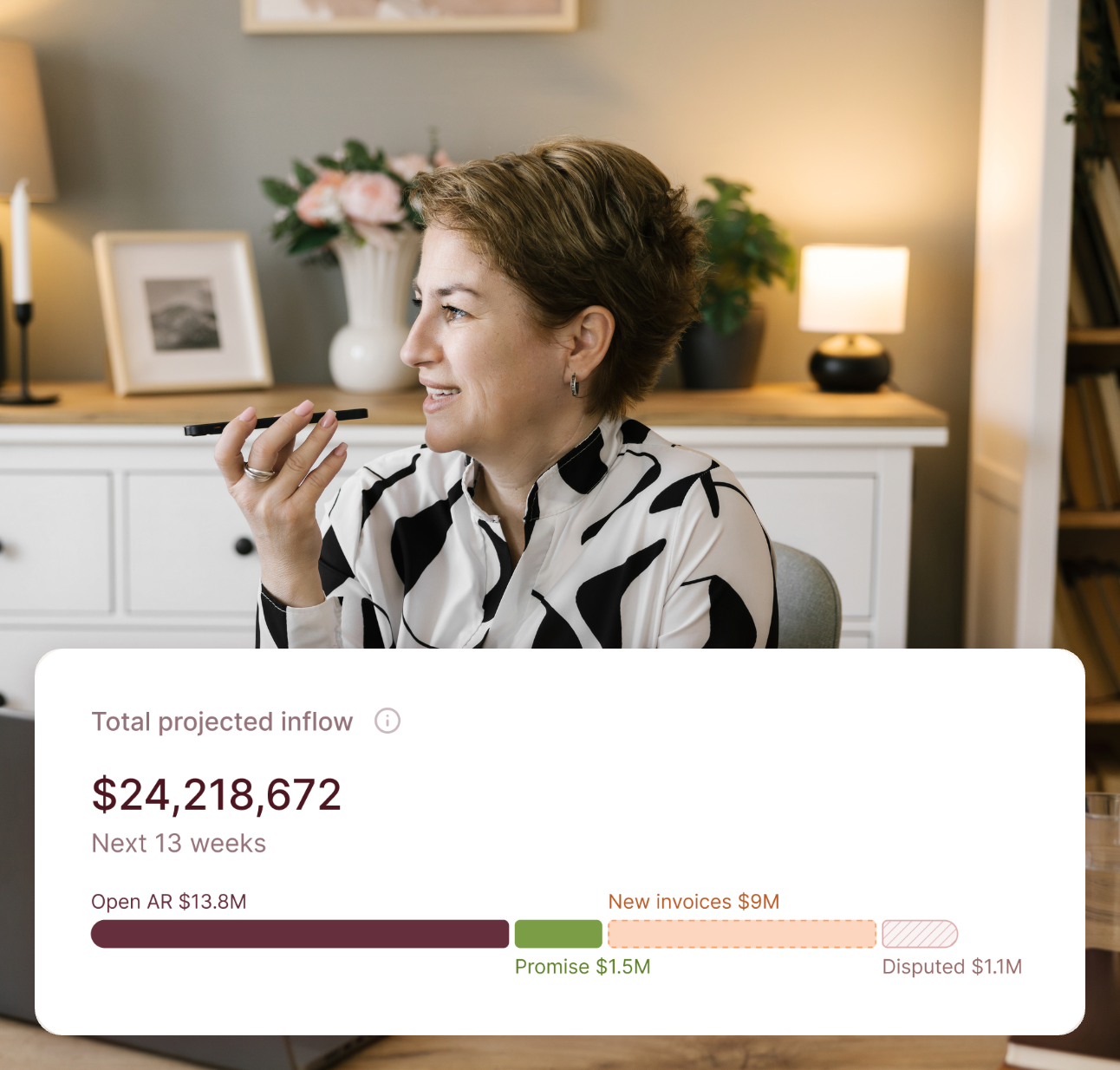
Forecast updates with promises and disputes. Daylit's Cash Flow Forecast gives a 13-week view weighted by how each customer actually pays. When a customer promises a date or raises a dispute by email, the AI shifts that invoice's predicted date, and the forecast refreshes nightly. Billtrust's AI cash forecast is built on "Billtrust payment activity, invoicing data, and a daily open AR balance file" and tracks drift in days-to-pay; we found no promise or dispute inputs.
Auto-tracks promises to pay. When a customer promises a payment date in an email, Daylit's agent logs it on the account and moves the forecast to match. Billtrust's call AI highlights commitments in its call notes, but we couldn't find promises made by email being logged automatically, so those are left for a collector to log by hand.

Bring your ERP, your current DSO, and your three messiest open disputes. We'll walk them through Daylit with you and show what goes live in the first 72 hours, and what your team still handles.
Who Does the Work
Billtrust has AI across its collections product. The difference is what happens after the AI has an answer. Billtrust describes its calling as "human-led, AI-assisted," says "collectors still review and refine every AI-generated email draft" before it sends, and lets collectors accept, reject, or customize each recommendation. Daylit's agents do the work themselves, inside rules your team sets, and hand a person only what needs judgment.
Some of the work already runs on its own at both:
- Pausing dunning on a dispute: Billtrust says it will "automatically pause disputed invoices from dunning schedules" until they're resolved, and Daylit stops dunning the moment a case opens.
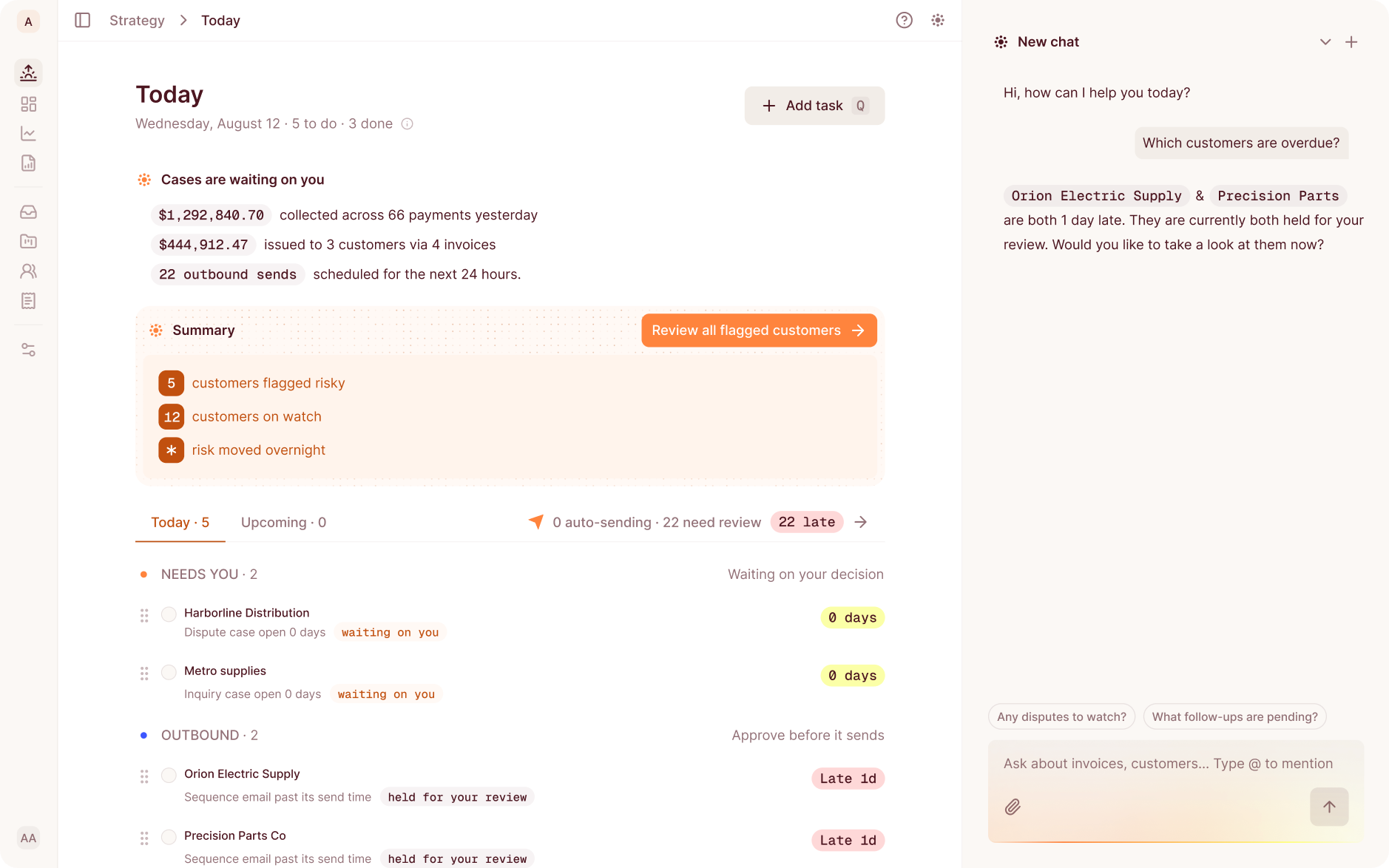
- Sorting the inbox: Billtrust's Agentic Email categorizes and prioritizes each case with a suggested next action, and Daylit's agent sorts every inbound email as a dispute, a promise to pay, an inquiry, or a wrong contact.
Three more tasks show where the two models split:
A dispute gets its reason from the agent. Daylit classifies each dispute against reasons your company defines, then runs internal verification and customer resolution at the same time. Billtrust centralizes dispute tagging and routing, but we found no AI assigning the reason and no parallel handling on its site.
Promises made by email get logged. When a customer promises a payment date in an email, Daylit's agent logs it and moves the forecast to match. Billtrust's call AI highlights commitments in its call notes, and we found no email promises being logged.
Every message is re-checked before it sends. Daylit checks the balance on each draft at send time. If the amount changed, it updates the draft and flags the change to the reviewer. If the customer already paid, it cancels the message. We didn't find an equivalent on Billtrust's site.
Count the tasks on your team's list that still need a person under each model. That difference is headcount, and it compounds every month the platform runs.
Where Daylit Is Deliberately Different
Daylit isn't trying to out-tenure Billtrust. It's a different bet entirely: most mid-market AR teams don't need two decades of industry-specific templates, they need collections that execute on their own and cash that doesn't depend on how fast a customer pays. FundNow exists as a built-in capability, not a bolt-on partnership, because of that bet. Every claim on this page comes with its source attached, for the same reason.
Where Billtrust Is the Right Call
If your business sits in one of the 40-plus specific industries Billtrust has built templates for over its 25 years in the space, that depth is real and hard to replicate overnight. Billtrust also has a far larger installed base, with thousands of companies across those industries. That's a genuine advantage for a company that values a long track record and industry-specific configuration over a newer, faster-moving platform.
The Real Question Isn't Which Platform Is Better, It's Which One Tells You What You Need to Know
Billtrust has two decades of industry depth and a large customer base. Its only current implementation number is a best case, and its own site can't agree on its DSO numbers. The fastest way to know which of those things matters more to you is to ask a direct question on your next call: how long, exactly, will this take, and what happens if it takes longer.
Frequently Asked Questions
What is Daylit, exactly?
An AI-native AR automation platform for mid-market B2B finance teams. A decision layer trained on $100B of AR transactions works out why each customer isn't paying, then runs collections, disputes, and follow-up through configurable playbooks per case type. FundNow, built into the same platform, converts outstanding invoices to cash without a separate factoring relationship.
Is this fair to Billtrust?
Every Billtrust claim here traces back to their own product pages or public materials, linked throughout, including the places where their own site doesn't agree with itself.
What does Billtrust actually do better?
Two decades in the AR automation space, industry-specific templates across 40-plus verticals, and a substantially larger installed base of companies than a newer platform like Daylit.
How long does Billtrust actually take to implement?
As little as 45 days for Collections with its Quickstart option, per Billtrust's October 2025 release. That's a best case, and Billtrust doesn't publish a typical timeline. Its 2020 press release put ordinary go-live at around 90 business days, so ask for the timeline that applies to your ERP setup in writing.
When do results actually show up?
Integration is measured in days, not quarters, so the work starts the same week. The first visible change is on disputes, where resolution time drops by 10x. On-time payment and DSO move over the following billing cycles, as pre-due-date outreach replaces fixed reminder schedules. Both of those figures in the table above are ceilings companies have reached, not first-month expectations.
Why does this page point out where Billtrust's own numbers don't agree?
Because a comparison only means something if every number in it holds up, including a competitor's, not just the ones that favor Daylit. Billtrust publishes no figure for on-time payment lift, end-to-end dispute resolution, or a current return on investment, and on two more rows (AI-assigned dispute reasons and promises logged from email) we couldn't find the capability described on its site. Where its own pages disagree, as on DSO, this page shows both numbers.
Enter your revenue, DSO, team size, and invoice volume to get an itemized breakdown of your savings.