Daylit vs. Monk: AR Automation Compared for Mid-Market Teams
Monk goes live in about 4 days and Daylit in 72 hours, and both pause follow-ups when a customer disputes an invoice. The difference is in what gets measured, how a dispute gets worked once it's open, and whether an invoice can become cash before the customer pays. Here's the full comparison, including where Monk actually has the edge.
TL;DR
- Daylit is a day faster, but speed won't decide this: Daylit's integrations go live in 72 hours, and Monk's platform page puts its average go-live at 4 days. Both are measured in days.
- Monk states its DSO result two different ways: its blog says a 40% average reduction, and its platform page says 8 days. It never gives the baseline that would connect the two.
- On disputes, Monk is closer than most: it detects disputes, keeps them in a queue, and pauses follow-up on the invoice. Daylit adds a published 10x cut in end-to-end resolution time and sorts every dispute into your own categories.
- Invoice financing is the one row with no contest: Daylit's FundNow buys invoices directly, and Monk has no financing offering.
- Some teams should call Monk: if your AR delays come from procurement portals, W-9s, and approver chains, and you want 7-day-a-week support with a dedicated engineer, it fits. This page is for the mid-market team that needs its disputes measured and its cash available before the customer pays.
Why Monk Deserves a Serious Look
If you're evaluating AR automation built on AI agents, Monk has probably come up. Its blog says it manages $2B+ in receivables, it goes live in days, and it handles the edge cases most platforms skip, from Coupa and Ariba portal uploads to missing W-9s. None of that is in dispute.
Monk and Daylit agree on more than most vendors do, including that a disputed invoice shouldn't keep getting reminder emails. So the real test is narrower than usual. It's what happens between a dispute opening and cash landing, and what you can do about a customer who simply can't pay yet. That decides this comparison, not a feature checklist.
What to Demand From an AI Agent Before You Hand It Your Customers
Before the row-by-row breakdown, here's what any agent-based AR platform should show you without hedging:
One DSO number: stated the same way on every page, with the baseline behind it.
A resolution time for disputes: not just how many close without a person, but how long they take to close.
Your rules for each case type: so the agent follows your policy instead of replacing it.
A plan for slow payers: a way to get cash when a customer pays late, not just faster outreach.
Measure both platforms against that list, not against each other's marketing.
The Comparison, Not the Pitch
Every figure below comes from Daylit's or Monk's own published materials. Where Monk hasn't published a claim, that gets said plainly instead of implied. These seven categories are the ones that actually change whether an AR platform fits a mid-market team: how fast cash comes in, how long until the system is live, what happens when an invoice is disputed, and whether the platform can do anything about cash before the customer pays. Figures last verified September 2026.
Here is the whole comparison in one view, with every figure explained underneath:
| Metric / Feature | Daylit | Monk |
|---|---|---|
| DSO / collection speed | Up to 50% reduction | 40% average on its blog, 8 days on its platform page |
| Integration time | 72 hours, nine ERPs supported | 4-day average go-live |
| Dispute resolution time | Cut by 10x, end to end | Not published; 90% resolved without escalation |
| On-time payment rate lift | 40% increase | Not published; 24% higher response rate |
| Exception & dispute handling | Every dispute tracked as a case and sorted by your own reasons, dunning auto-paused | Dispute queue, follow-up paused, portals and W-9s handled |
| Customizable approval workflows | A playbook per case type | Rules for tone, escalation thresholds, and exceptions |
| Embedded invoice financing | FundNow, built in | No offering found |
Taking It Apart, Row by Row
DSO / collection speed: Daylit reports a DSO reduction of up to 50%. That's a ceiling, the best result a company using Daylit has reached, not an average. Monk describes its result two ways. Its AR collections guide says companies using Monk see "a 40% average reduction in DSO." Its platform page lists "8 days" as the "average DSO reduction across all industries we serve." A percentage and a day count only line up at one starting DSO, and Monk doesn't say what that is. Ask Monk which number applies to a company like yours and what baseline it's measured from, then ask Daylit the same.
Integration time: Daylit is slightly faster on paper. Its integrations go live in 72 hours across nine native ERP and accounting systems. Monk's platform page lists a 4-day average go-live, and its integrations page covers a wide range of ERP, CRM, and payment systems. Both are measured in days, so neither is the reason to pick one over the other. Ask both vendors the same question: what does "live" include, and on what day does your first customer actually get contacted.
Dispute resolution time: Daylit reports cutting total time from dispute opened to dispute resolved by 10x. Monk doesn't publish a resolution-time figure. Its closest number is on its platform page: "90+% invoices resolved without escalation." That measures whether a person has to step in, not how long the dispute takes to close. Ask Monk for the median number of days from dispute raised to cash applied.
On-time payment rate lift: Daylit reports a 40% increase in on-time payments versus fixed-interval dunning. It gets there by flagging payment risk 7 to 14 days before the due date and timing outreach per customer. Monk publishes no on-time payment rate. Its homepage says its agent gets "24% higher responses vs automated follow-up emails." A reply is the step before a payment, so it's related, but it isn't the same measurement. Read this row as unmatched rather than beaten.
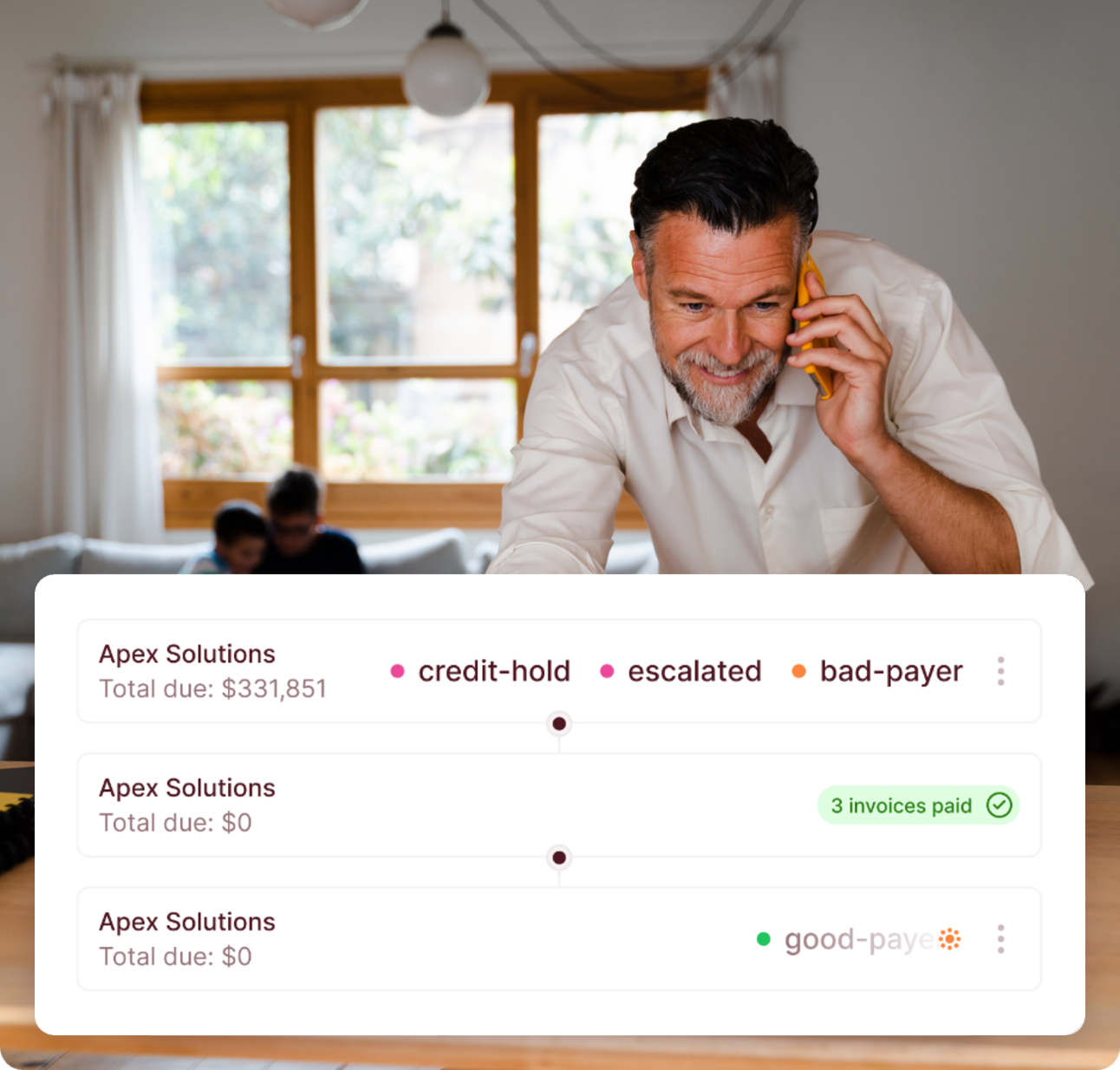
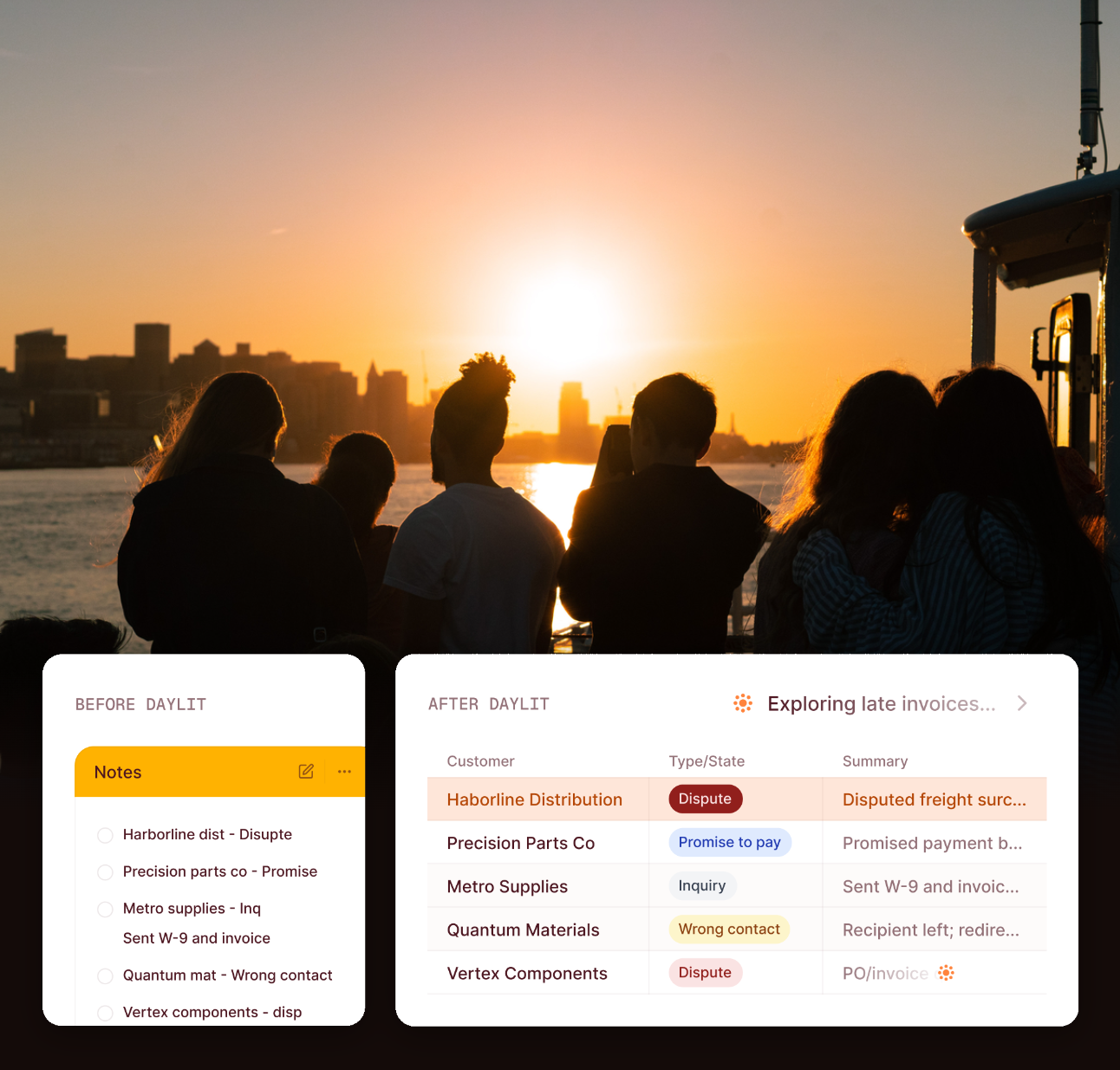
Exception & dispute handling: this is Monk's strongest row, and it's closer than most competitors get. According to its dispute management guide, Monk detects a dispute when a customer raises one, keeps it in the collection record with full context, pauses routine follow-up on that invoice, and flags the cash as at risk in the forecast. Its homepage also lists the edge cases it handles: uploads to Coupa and Ariba, missing POs, W-9s, AP vendor setup, and approvers out of office. Daylit also stops dunning the moment a dispute opens. Every dispute becomes a Collection Case, and internal verification and customer resolution run at the same time rather than in sequence. Daylit's new Dispute Reasons feature then sorts each dispute into categories your team defines, and each category carries its own next steps. The collector sees the assigned reason, how confident the agent is, and why. Monk's dispute queue filters by status and customer, and it doesn't publish a way to route disputes by your own categories. Ask each vendor to show a short-pay and a PO mismatch side by side, and watch whether they get worked differently.
Customizable approval workflows: both platforms let your rules steer the agent. Daylit runs a separate playbook for each case type, such as a dispute, a promise to pay, or an inquiry. Your team builds each one once in Settings, and the agents execute it automatically. Monk has you set tone, escalation thresholds, and exceptions once, and its platform page says it escalates to your team "only when necessary or per the rules that you set." Monk also handles approval delays on the customer's side, rerouting when an approver is out of office. That last one is a real edge. Ask each vendor to show you how a payment-plan approval gets set up.
Embedded invoice financing: FundNow buys the invoice directly from inside the Daylit platform. Cash lands today, without waiting on the customer or setting up a separate financing relationship. No financing or factoring offering appears in Monk's published materials. Monk states that it doesn't take a percentage of your revenue. That's a pricing point, not a financing product. This is the only row with no contest.

We'll walk your open disputes through Daylit with you and show you how each one gets sorted, routed, and closed.
Where Daylit Is Deliberately Different
Daylit and Monk agree on the premise: AR should run on agents, and a disputed invoice shouldn't keep getting chased. Where they split is on what happens after the pause.
Daylit's decision layer, trained on $100B of AR transactions, works out why each customer isn't paying. Every dispute is sorted by your own reasons and worked through the playbook for that case type, and Daylit publishes what that does to resolution time: a 10x cut, end to end.
It also flags payment risk 7 to 14 days before the due date and times each reminder to the customer. That's behind Daylit's 40% lift in on-time payments, a figure Monk doesn't publish.
Some customers aren't slow so much as short on cash. That's why FundNow is built into the same platform. The invoice becomes cash today, whenever the customer ends up paying.
Where Monk Is the Right Call
This page doesn't apply to everyone. Here's where it breaks down:
Your AR delays come from edge cases: Monk's homepage lists procurement portals like Coupa and Ariba, missing POs, W-9s, and AP vendor setup, and says edge cases cause 39% of cash flow slowdowns. That's the most detailed edge-case coverage in this category.
You want support every day of the week: Monk offers 7-day-a-week support and a dedicated engineer for each company it serves. If hands-on support decides your shortlist, weigh it.
The Real Question Isn't Who Pauses the Dunning, It's What Happens Next
Monk goes live in days, handles more edge cases than almost anyone, and pauses follow-up on disputed invoices just as Daylit does. What's left is what happens after the pause: how fast the dispute actually closes, whether it gets routed by what it's really about, and whether the invoice can become cash before the customer is ready to pay.
Pull last quarter's disputes and sort them by reason. Then take that list to Monk and ask three things:
Resolution time: the median number of days from dispute raised to cash applied.
DSO: whether 40% or 8 days is the number for a company your size, and from what baseline.
Late payers: what happens to your cash when a good customer simply pays late.
Then bring the one dispute your team dreads to both demos.
Frequently Asked Questions
What is Daylit, exactly?
An AI-native AR automation platform for mid-market B2B finance teams. A decision layer trained on $100B of AR transactions works out why each customer isn't paying, then runs collections, disputes, and follow-up through configurable playbooks per case type. FundNow, built into the same platform, converts outstanding invoices to cash without a separate factoring relationship.
Is this fair to Monk?
Every Monk claim here traces back to Monk's own homepage, platform pages, and blog, linked throughout. That includes the places where those pages state the same result in different ways.
What does Monk actually do better?
Edge-case handling across procurement portals, W-9s, and approval chains, and 7-day-a-week support with a dedicated engineer.
How long does Monk actually take to implement?
Monk's platform page puts the average at 4 days, and its FAQ says 24 hours to 7 business days depending on scope. Either way it's measured in days, the same as Daylit.
Doesn't Monk pause dunning on disputes too?
It does, according to its dispute management guide. The difference is what happens next. Daylit sorts each dispute into your own categories, gives each category its own next steps, and publishes a 10x cut in end-to-end resolution time. Monk publishes a 90% no-escalation rate, but no resolution time.
Is Daylit built for enterprise companies?
Daylit is built for mid-market B2B companies, typically $50M to $500M in revenue. Their AR teams usually run 2 to 5 people. A global enterprise running multiple ERPs is better served by an enterprise AR platform.
When do results actually show up?
Integration is measured in days, not quarters, so the work starts the same week. The first visible change is on disputes, where resolution time drops by 10x. On-time payment and DSO move over the following billing cycles, as pre-due-date outreach replaces fixed reminder schedules. Both of those figures in the table above are ceilings companies have reached, not first-month expectations.
Why does this page keep flagging which Monk number is which?
When two vendors both go live in days and both pause disputed invoices, features alone can't separate them. The numbers carry the decision. A 40% average and an 8-day average are both real claims, but they only describe the same result at one starting DSO, and you should know which one you're being quoted.
Enter your revenue, DSO, team size, and invoice volume to get an itemized breakdown of your savings.